Exercise

Heated Workouts – Are They Better For You?

sauna-suitYou may have heard that hot workouts like Hot Yoga or wearing a Sweat Suit or exercising in warmer temperatures or sitting in a sauna and steam room will do all kinds of things, like make you lose more weight faster, detoxify the body etc.

While it is true that a very small amount of toxins leave our body through sweat, it is the kidneys which are the main detoxifier of the body, along with the liver and gastrointestinal tract and immune system.  The kidneys rid our body of toxins by helping you pee and poop them out.

Sweat is the body’s way of cooling itself so you don’t overheat your main organs, etc.  It’s how your body maintains that ideal internal temperature of 98.6, whether the temperature outside is 100.4 degrees fahrenheit or not.  It does elevate the heart rate somewhat to be in a higher temperature like a sauna after a workout, but the extra calorie burn is only slight and the risk may not be worth it.

When we sweat, we lose electrolytes – chloride and sodium and water in a plasma-like substance.  Only some sweat glands do release some lipids (fats).  Most of what you are losing through sweat is just water weight, which will come right back on after you drink something (which is a great thing to do after exercise, by the way).  Our weight actually fluctuates throughout the day, so don’t get all excited about a loss of weight after your first hot yoga class.

Sweating too much can be harmful!

It can lead to heat exhaustion, heat stroke, injure your kidneys – even lead to heart failure.  You need proper hydration in order to burn fat stores.  Sitting in a sauna or steam room isn’t going to burn off fat to make you start losing dress sizes.

Sweating and cooling are great de-stressers though..something about that feeling of sweating is something we associate with having worked hard.  Your body does have to work harder to bring itself to the correct temperature, so you could be burning more calories in a hotter classroom as the heart rate and circulation increase.

If wearing a sauna suit made us lose weight, wouldn’t we all be reading this here eating doughnuts in a sauna suit?  They don’t work and they can be dangerous.

So why do some people sweat more than others?

Smoking, caffeine and alcohol increase sweat, what you are wearing can affect it (some synthetic fibers trap heat).  Fat can act as an insulator so some fatter people sweat more.  Some people have more sweat glands than others.  Some people have more active sweat glands than others.  I heard of one study which indicated athletes sweat more than un-fit people because their bodies become more efficient at cooling themselves.  According to the same study published in the Journal of Experimental Physiology, unfit women sweat the least.  Bottom line – don’t necessarily use sweat as an indicator of how good a workout you got.

Heat can make muscles relax more – so you may find you are more bendy at hotter temperatures.  Seniors may benefit from exercising at SLIGHTLY warmer temps..but go too high and you may be more prone to injury from becoming too bendy.

Given the option, I prefer to exercise at temperatures which lead to ideal performance—like 68 -72 degrees or so, rather than those higher temperatures which leave me too tired to perform at my best.  At 68 degrees, I get a better workout at a better intensity, burning more calories overall and increasing my body’s ability to build lean muscle– which helps me burn more calories after exercise while my body is repairing those muscles as I sit back and enjoy a book or something.

Q&A, Soreness/Pain

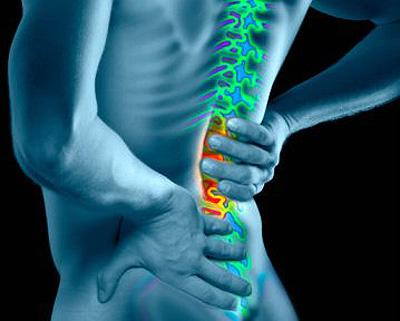
Q&A: Low Back Pain

lowbackQ:  I was standing and praying all day in Synagogue for Yom Kippur – at least 3-4 hours at a stretch and I had a long walk there from my house, too.  My low back is aching.  Is yours?  Do you have any exercises I should do?  I hear that I should strengthen my abs but my stomach is strong already.  Please don’t use my name in your blog post. I don’t want people to think I am unhealthy.  It just came up because I was standing so long on Yom Kippur and not something that happens to me all the time.

(Achy Back, Some Synagogue in America–Name withheld upon request)

A:  Dear Achy Back,

Don’t worry. Nobody will figure out who you are!  80% (some experts even say 90%) of Americans suffer from low back pain at some point. The majority of folks suffering are between the ages of 25 and 60.

Most cases are due to poor body mechanics – posture/muscle imbalances and not from things like cancer, arthritis, or fractures, bone loss or kidney stones etc.  Though those things can also cause back pain.   Before simply pointing you in the direction of some good core strengthening exercises (as opposed to ab exercises like situps/crunches), the better more complete approach would be to do a postural assessment to see if any muscle imbalances might be causing your discomfort.

A few postural deviations which can lead to low back pain include lordosis (sway back/overly arched lumbar spine and an anterior pelvic tilt), kyposis (hunch back, rounded shoulders and perhaps a forward jutting head) or hip and shoulder height discrepancies which might indicate a spinal curviture/scoliosis.

For those who tend toward lordosis and have an anterior pelvic tilt, I would strengthen the abdominals and stretch the iliospoas and erector spinae muscles.  For those with kyposis, I would strengthen the mid-trapezius and rhomboids and stretch the chest – the pectoralis major and the anterior deltoids.

Performing traditional ab exercises without proper lumbo-pelvic-hip stabilization has been shown to increase pressure on the discs and compressive forces in the lumbar spine actually.   So I think it would be more prudent to work on core stability before building you some abs.

  1. The drawing-in maneuver:   Get on your hands and knees on the floor like a dog.  Make sure your hands are under the shoulders and your ears are in line with your shoulders and there’s a straight line – ears, shoulders and hips.  Knees are directly under the hips.  Maintaining this neutral spinal position, now pull the region just below your belly button toward your spine.
  2. You can also lie on your back with your knees bent, feet on the floor, toes pointing straight ahead, arms and palms down at your sides and lift one leg at a time marching.
  3. Floor bridge.  Staying on your back with knees bent, feet shoulder width apart, arms by your sides, palms down, push though your heels and raise your hips off the floor as you draw your navel in and activate your butt muscles.  Raise your hips until your knees, hips and shoulders are in a straight line.  Slowly lower to the floor.
  4. Floor prone cobra:  Lie on your tummy on the floor, arms at your sides, palms facing the ground.  Draw your navel in, activate your butt muscles, pinch your shoulder blades together as you raise your head and chest off the floor.  (Keep legs and hips on the floor.) Hold for 1-2 seconds and slowly return to the floor keeping your chin tucked.
  5. Plank.  Lie with your belly facing the floor, feet together, elbows under shoulders and forearms on the ground.  Draw your abs in and activate your butt muscles.  Lift your whole body off the ground.  The only parts touching the floor are the balls of your feet and toes, and your elbow and forearm and fist/hand.  (If this is too difficult, you could do it in a modified push-up position – knees and hands on the floor)

Once your core is stable, we could build you some abs and strengthen your low back more to further improve your kinetic chain and prevent the low back pain.  Remember not to hold your breath during these exercises!!

Here are a few other tips to prevent low back pain: maintain a healthy weight, stay active, lift with your thighs by bending at the knee instead of the waist when lifting heavy objects and avoid twisting while lifting. Wear low-heeled shoes.

Diet, Exercise, General Health

Are You Skinny Fat?

fatIt has been a colorful 2 weeks since I last posted.

I have been substitute teaching PE at an all-girls private High School.  When I took the 9th graders, split them into groups to do resistance exercises circuit-style, one group assigned to do sit-ups couldn’t execute a single sit-up with proper form.  One pretty young thing just lifted her head up and down while laying on her back. It was so sad.

I explained to them the many health benefits of exercise.  I don’t think they were incredibly impressed.

I explained how 65%+ of Americans are overweight – which puts them at all kinds of health risks from diabetes to heart attacks and cancer.  They could even quote back the statistics to me…and nobody seemed to think these numbers had anything to do with them.  If you look around, its usually like a carnival house of mirrors with all kinds of distorted bodies peering back at you – distended bellies and all, but this group was actually relatively thin looking.  From all outward appearances, you would assume they are a healthy bunch.  So I think the girls figured they don’t really need to exercise.

That’s simply not true!  There’s something called Skinny Fat – medically, the term is metabolically obese, normal weight (‘MONW’).  Not enough lean muscle.  Or your ratio of muscle to fat is off-kilter.  For instance, a body-fat of 24-39% is high by medical and health standards, but with good genes and bone structure you might appear thin.  Yes, its also true that if you fit into a size 2, but you still jiggle while you wiggle and your skin feels spongy…there’s a good chance you fit the definition of skinny fat.

Actually, a Skinny Fat person can have the same health risks as someone overweight/obese—or worse.  The shocking news published in the Journal of the American Medical Association is that nearly 1 in 4 skinny people have pre-diabetes and are metabolically obese.   Skinny people diagnosed with diabetes have twice the risk of death than heavy people with it.  Could be that having some extra muscle from lugging around that extra weight is protective?

In other words, a heavy fat person with a good amount of muscle might be healthier than you, Miss String-Bean!  Yeah, fit people come in all shapes and sizes is what I am saying.

Why am I so passionate about this subject?  Because I have been Skinny Fat myself.

Thanks to genetics and bone structure, I appear taller and slimmer than I actually am.  Many years ago, after the birth of my second child, I went for my annual physical.  The doctor looked at the results of my blood tests and asked what I did for exercise.  I told him “I chase toddlers. ” He went on to tell me that although I was active and exhausted from all the chasing of my kids all day long, I was actually 33% body-fat.  I was obese.  I gasped – but I’m not that heavy according to the scale!  He said if I were older, he would have put me on a statin drug because of my cholesterol numbers and that I should start an exercise program (I had not done regular exercise since High School) and eat oatmeal for breakfast.  I joined a gym and attended classes religiously, ate my oatmeal for breakfast, backed off on the fancy coffee dessert-drinks, and within 3-6 months I had lowered my cholesterol 13 points.  This was the start to my journey of becoming a fitness professional.

There are a number of tests your Doc can run to see if you are Skinny Fat, including a fasting glucose tolerance test, HDL, triglycerides, blood pressure, NMR lipid particle test.

So how to fix it when you are Skinny Fat?  Pair a lean protein with a healthy low GI carb at every meal in order to keep blood glucose levels steady.  For instance, an apple with some almonds, a hard boiled egg and oatmeal, celery and peanut butter, rice and beans, chicken breast and bell pepper.  Don’t drink your calories.  Get enough sleep.  Do resistance training with cardiovascular intervals…just like I have been doing with all of the classes I have been teaching at school this week.

Don’t worry – if you lift more than 2 lbs you aren’t necessarily gonna bulk up and look like a female version of the Hulk!  If you would like more help finding a fitness program to help you avoid being Skinny Fat, drop me a line or take one of my classes this week!

Exercise

5 Favorite Moves to Help You Get Your Inner Thigh Gap

thigh

If you can stand straight with your knees together and see a space between your upper thighs, you have what’s known as a thigh gap and its getting a lot of notoriety on social media this summer…particularly among teenage girls.

A thigh gap can happen because of a particular bone structure or being toned and lean.  It can also happen, sadly, because a person is so emaciated and unhealthy that you can see air between their legs!  Some people’s genetics, pelvic size and width etc. just aren’t going to allow them to have a thigh gap.  Some ladies don’t want one, need one or like one.

If the notion of a thigh gap motivates you to stop eating so much frankenfood and get off the couch, great!  Have a realistic understanding that you may never look like a runway model from doing some thigh exercises and most of us might not be so healthy if we did.  Toning exercises for the inner thigh can help prevent injury, are needed for certain sports and life activities and, like all resistance exercise, help build bone strength.  If you hate the rubbing, heat rash from your thighs touching, use that as motivation to get off the couch and try some of these exercises.

Remember to do a light dynamic cardio warm up to activate the legs and thighs before beginning these resistance training exercises and add a cool down and stretch your quadriceps, hamstrings, inner and outer thighs and calves afterwards.  Always listen to your body – if it doesn’t feel right to you or you have pain, that’s a sign to back off or stop.  Modify the exercises as needed.  Take breaks whenever you need to.  (Any exercise carries a risk of injury.  Please consult your doctor before beginning any exercise program).  No equipment is needed.

  1. Forward Leg Liftthigh-ex1
    This is a ballet move that tones the quadriceps (the top of the thigh), as well as the adductors (inner thigh muscles). The adductors are often a weaker muscle. Toning the adductors will firm it and help you achieve that inner thigh gap.

    Find your balance or hold a chair or wall to help you gain stability.

    Begin standing with your legs straight. Feet slightly outward.

    Extend one leg up in front of you, toe pointed and turned outward and slowly lower the leg back down to the floor, heels touching where they meet.  Repeat 3 alternating sets of 8-12 repetitions each leg

  1. Sumo Plie’ with Slidethigh-ex2a
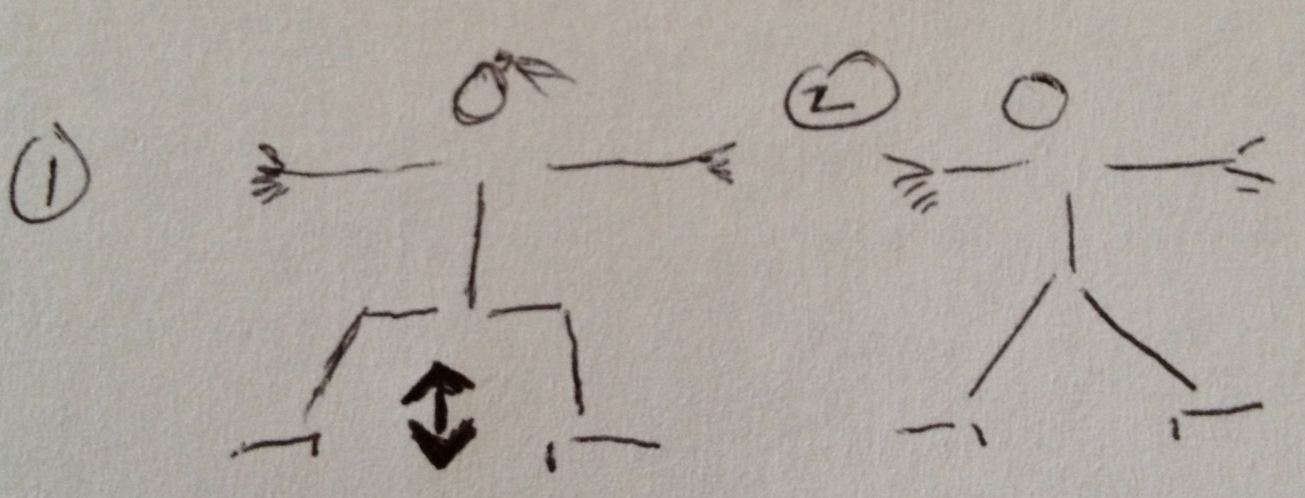
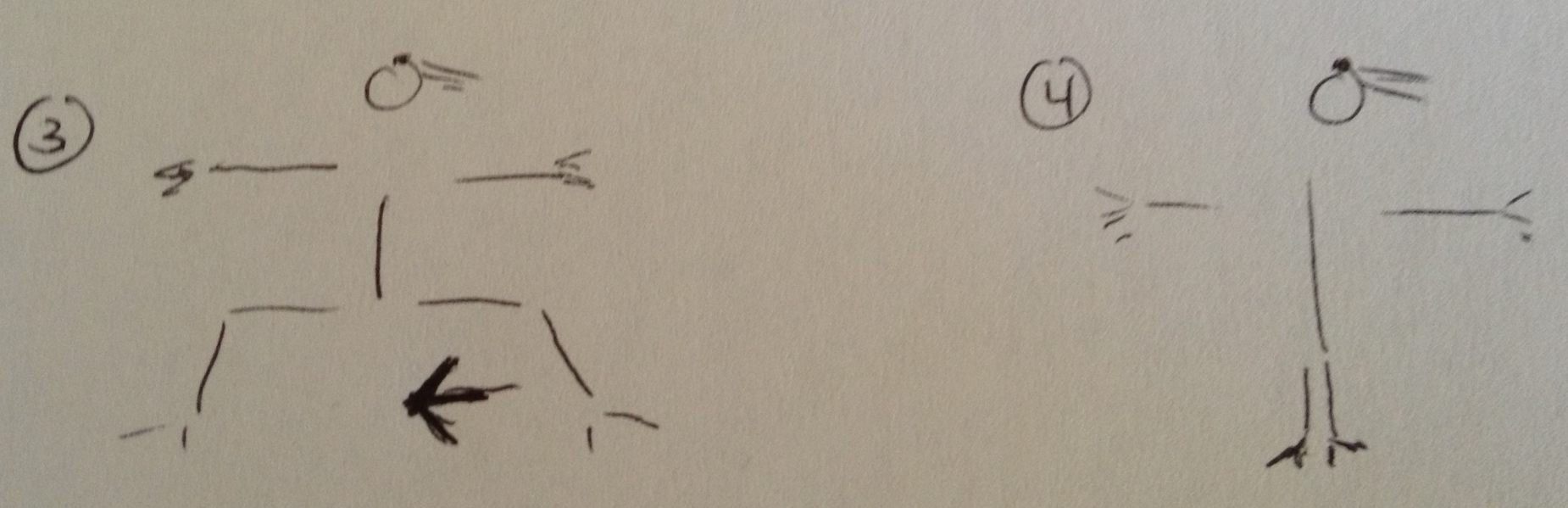
    Begin in a sumo squat knees and toes pointing outward/away from the mid-line of the body.  Keeping your knees behind the toes lower down until your thighs are parallel with the floor or you feel the muscles of the top of the thigh elongating.  Keeping your navel pulled toward the spine and your shoulders down and back, exhale as you straighten the knees and squeeze the glutes (buttocks) and inner thigh.  (steps 1 & 2)

    thigh-ex2bNow for inner thigh work, (steps 3 & 4): Squat as above and as you straighten the knee and come to standing slide/drag the left leg across the floor using the floor as resistance bringing the left heel to meet the right heel.  Repeat on the other side.  Again, 8-12 repetitions each leg, 1-3 sets as your strength allows.

    To make this exercise even more challenging , you can hold 5-8 lb (or more) dumbbells in each hand together at chest level while performing the exercise.

  1. Side Lying Hip Adductionthigh-ex3a
    Lie on your side left arm extended overhead, legs straight, head resting on left arm.

    Cross your right leg with the knee bent over your left leg, right foot on the floor.

    thigh-ex3bLift the left leg, leading with your heel by squeezing your inner thigh.  Stay tight through your core.  Relax head and neck.  Maintain a straight line from head to hip to heel.

    This is a small movement.  You do not need to lift very high to feel it working.  When you lower the left leg down, try to hold it slightly off the floor rather than letting it relax all the way.  To make this exercise more challenging, you can add ankle weights or hold a dumbbell on the working inner thigh.  If you need more help stabilizing yourself from rolling forward or backward, you can use the arm closest to the ceiling to hold the bent leg or the floor in front of you.

    This exercise can also be performed with the leg closest to the ceiling propped on a chair and the head resting on your hand, but be sure to keep the spine in neutral.

  1. Standing Leg Sweepthigh-ex4
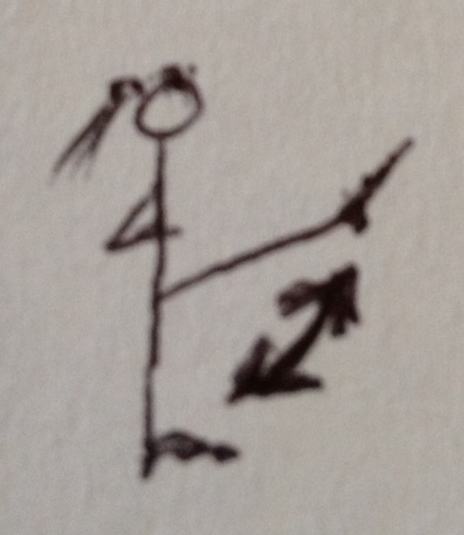
    Stand, holding your kitchen counter if you need more balance, or sideways to a wall or chair.  Feet together and turned slightly outward.  With a straight leg, leading with the heel, exhale and sweep the right leg across and in front of the left leg (working the right inner thigh).  Inhale and swing the right leg  out to the right side (working the right outer thigh and right glute).

    If its too intense for you to swing and extend the right leg out to the right and hold it in the air, you can modify this by tapping the right toe to the floor.

    Repeat the right leg sweep 8-12 times, then try the exercise with the left leg.

    Do 3 sets each leg.

  1. Supine Leg Crossesthigh-ex5
    Lie on your back, hands at your sides and close to your body raise both legs to the ceiling.  Open the legs and with pointed toes and straight knees close the legs and cross them.

    A few variations to this exercise: you can keep the legs wide and exhale as the legs close or you can do them with a smaller range of motion or mix it up – big ones and small ones.

    If you would like to add some abs, lower the legs 6 inches closer to the floor to intensify the lower abdominal involvement in this exercise.

Is there a body part you would like to know how to work?  I would be happy to meet and design a workout program for you.

Personal Trainers

TRX Training

I attended the TRX Suspension Training Course this past weekend.  KaylaTRX

Sometimes after a training course, you leave inspired, but your head is just spinning with such info-overload that you can’t really recall or apply what you know.  I wanted to avoid that overwhelmed kind of feeling, so I googled around the night before just to see if I could get a course outline or preview.  I just couldn’t find much out there aside from the TRX web site to reassure me about the course.

So this blog post is for you – the exercise enthusiast as well as the newbie to TRX and the seasoned Personal Trainer looking to diversify your modalities and help distinguish/boost your personal brand and anyone else who is considering taking a TRX suspension training course.

Recommendations to help you juice your dollar for the experience

I did a few things which I would recommend other people do before attending, besides getting a good night’s sleep and eating well/packing a decent lunch… I took a few classes in TRX and ordered one for home use and familiarized myself with some of the more popular exercises to do on the TRX.  While you don’t have to have ever used a TRX before the workshop, I would recommend at least spending some time playing around with it or going to a class at a local fitness studio or bootcamp, simply to prevent that information overload head-spin experience because it is a lot of info. At the same time, the printed materials are wonderful and complete, so you can always go home and spend a couple hours or more pouring over them afterwards to help you piece it all back together.

What it was like to be there and what’s the content of the course?

Our instructor, Alex McLean, gained my respect immediately – from his warm welcome to his impressive credentials and his physical capabilities, and knowledge about training, group fitness and the TRX. Alex gave a focused, organized presentation and kept us riveted. There was not a moment of wasted time. A fantastic motivator, educator, entertainer and all around ring leader.

There were 20 people who attended. Of these, one was an exercise enthusiast and the rest were personal trainers with the majority possessing under 5 years of experience if I recall correctly.. two were studying for Trainer Certification, but had experience teaching fitness and there were some veteran trainers with 10-20 years experience. One person flew in from Arizona and another from Uruguay. There was an instructor from Orange County and a couple from San Louis Obispo.

Alex presented the material in a way that seemed unique and genuine and he wasn’t afraid to digress from the text to illustrate a form pointer or logical progression or make the information flow better and link concepts logically. While I didn’t manage to snag a course outline, I’m going to mention a few items from memory and the text that we did cover and discuss some things which weren’t covered in the course.

First, we took a few seconds for everyone to say their background and where they’re from, which was great for networking and generally just breaking the ice. Then we got down to anatomy…of the TRX. Using the same terms really helps when you have to explain to a client how to adjust the TRX quickly so you don’t have to demonstrate each exercise and you don’t have to have them stop working out to allow you to make adjustments to the equipment. The terminology lesson kept all of us trainers on the same page when discussing how we would use the TRX to perform exercises for different types of clients.

We also went over some differences between various TRX models. We had an overview of the history of the TRX and suspension training, along with its benefits. We learned some cool ways to get in and out of the foot cradles and when to position the TRX in the fully lengthened, shortened, mid-length and mid-calf position. We learned some of the why behind the training – how using multi-planar exercise is more functional for real world activities than typical machine based exercises, which generally work clients in the sagittal plane, thus continuing to allow muscle imbalances from sitting most of the day (car/desk). We placed the TRX into single handle mode so many times I could probably now do it correctly blindfolded.

We covered 3 principles of progression – making exercises harder by moving closer to the anchor on some exercises, for instance, changing stability (feet together is less stable than feet apart etc), and 6 problematic ways of using the TRX and how to correct those errors. Learning how to progress and regress exercises for the 3 client scenarios: the couch potato with an injury, a regular exerciser and an athlete looking to develop power were all really helpful. In addition, we covered many exercises I had not seen before on the TRX.  We paired off and were led through exercises where one partner would correct the other’s form on the TRX and we could see and feel where the issues could be for our clients.

Alex stopped the course at various times to point out a particular issue related to form on the TRX so that all of us could help that individual do the exercise better by decreasing the resistance or increasing it or changing their position or the position of the TRX. That part was fabulous. I actually found myself the subject of one of these exercise correction sessions when I couldn’t perform the TRX incline press – it was a cross between a pushup and a handstand pushup with 1 leg on the floor. I just lacked the upper body strength to handle the load in that position. I think everyone met their match, regardless of ability, at some point – some exercise that just totally whooped their butt big time. The entire group got to brainstorm how to either change my position or change the exercise so that I could perform that movement to exercise those specific muscles required.

Later, we were given an awesome total-body workout for about 20 minutes on the TRX to music which Alex cued and instructed verbally.  I was amazed to see how we could follow even without him stopping to demonstrate each exercise. As one of my fellow participants told me – It was the best full body TRX workout she’d ever had. Kicked my booty!

We had a break for lunch, did more exercises and learned some alignment cues for each. One of my favorite parts was taking one exercise like a chest press typically done on a weight bench, performing it on the TRX and making about 8 progressions/regressions of it…It helped me remember and link the various exercises I learned to ones I already knew – the chest press and see how there are various ways to make that exercise more or less challenging by changing foot or hand positions, length of straps, and stability…and what I like about doing this exercise in the TRX as opposed to a bench is that it requires much more core stability in any of the positions and that’s functional training, because real life generally doesn’t isolate muscles.

It became apparent even after covering most of the book that we were just brushing the surface of the amount of exercises that could be performed with this tool and that it was up to us as trainers to create appropriate programs for our clients using the knowledge we already have as trainers. In other words, now that we are more familiar with the TRX, and we have our training background, we need to apply that knowledge to program design. It was super fun to have a break-out session and as a group, design a program for a client scenario—ours was Homer Simpson – a non-regular exerciser with a prior back injury…and then in teams of two, present one of those exercises to the group.

I did expect some sort of sales pitch going into the workshop because it was a workshop on one piece of equipment.  That pitch was about the CORE and how to market yourself using the CORE. One of the trainers in our group mentioned how he had purchased a TRX t-shirt and was stopped 3 times by people wanting to know more. That was cool. Yep, I bought a shirt. Nobody has asked me about the TRX while I was wearing it yet though.

I loved how we weren’t totally on our own after the workshop! Alex emailed the exercise list we had created for our imaginary client scenarios and the exercises in our group workout that he made for our workshop. I also got an email from someone at TRX offering support. That’s awesome. I also made some FB connections among other participants – great for networking.

I was concerned after the workshop if I sent my clients, they might feel overwhelmed by technical jargon or being surrounded by trainers so I emailed Judi – the 60-something fitness enthusiast to ask her how she felt about the experience. She absolutely loved it and felt inspired to learn more. She felt warmly accepted by the trainers and was grateful. Alex didn’t make her give an exercise presentation to the group or anything like that. She enjoyed learning about how most of our exercises work in the sagittal plane and how we can work in all planes of motion on the TRX. She was particularly impressed that Alex uses it with an 80-something year old wheelchair bound client who wants to maintain mobility – hello couch potatoes…now what’s your excuse?

So it sure seems like everything including the kitchen sink was in there! There were some things noticeably not covered though.

The burning question- Did we learn how to use it as a sexual aid? No. Though I am still convinced if used regularly it should make you better in bed – every exercise is a moving plank right!  Just checking if you are still reading. But I digress…

We were not given a list of specific contra-indicated exercises. We learned that for an exercise to qualify as suspension training, one limb was supported by the TRX and the other was on the floor, and each exercise was to be a moving plank..For those Personal Trainers and Group X instructors like me whose education included warnings from your certification agency that  “you can get your assets sued if you do certain danger-prone exercises like squats below 90 degrees or dead lifts etc.” kind of caution…or “make sure your heels hit the floor during the jumping jack or you will fail” … just know there was nothing of the sort at the TRX training.

I found that some of these training rules apply to suspension training, some don’t.  For instance, you aren’t perpendicular to the floor in a TRX squat, so you probably could go deeper safely… You will have to find that Goldilocks “just right” spot for your client by relying on your expertise and knowledge of your client and the movement pattern you want them to accomplish and the muscles you want them to engage when determining what’s right for them.

Speaking of that “just right” level of intensity, I knew I would likely be sore the next day because I would be doing movements in a new way that’s not typical in my regular routine. I didn’t expect to find myself not strong enough to do certain movements in certain positions.

I felt a grinding sensation in one hip flexor during my atomic sit-up and decided to back it off a bit on the intensity and change my position. The TRX, like any exercise modality, does have the potential to be something you could become injured on and it does use muscles in conjunction in a way you do not use them on other pieces of equipment.  Going through the movement myself and feeling the changes with another set of trained eyes pointing out the issues was very valuable.  Many of us have developed muscle imbalances and areas of weakness in our body mechanics that need to be addressed and the TRX could help us find those areas and eliminate them. Having a qualified trainer to guide you in a new TRX exercise so you don’t go too far too fast, and insure your alignment is correct, really can prevent a possible injury.

If you want to try out a few moves on the TRX, please contact me via my Facebook page.

If you would like to purchase your own TRX, go to the TRX Training Site.
Exercise, Fitness Goals

How To Get Arms Like Michelle Obama

The American Society of Plastic Surgeons (ASPS) released new statistics which show arm lifts in women have skyrocketed 4,378% in the last 10 years. While there’s no single reason behind the increase, a recent poll conducted in the USA by Harris Interactive on behalf of the ASPS found  that women most admire the arms of first lady Michelle Obama, followed closely by Jennifer Aniston, Jessica Biel and Demi Moore.

Brachioplasty does remove excess skin from the triceps area. It requires an incision from the elbow to armpit generally on the back of the arm and leaves a visible and permanent scar and carries the same risks as other operative procedures.  It also does nothing to actually tone the muscles in the upper arm.  But there’s no need to go under the knife.

There are ways to get those sexy celebrity arms without going under the knife!

In interviews with Vogue Magazine and with Oprah Winfrey, MIchelle Obama revealed that she pumps iron a the gym and regularly hits the treadmill.  “I also do some jump rope, some kickboxing…” added Obama. In fact, on the FLOTUS twitter feed March 11, 2013 she revealed that to relieve stress, she loves kickboxing!

FLOTUS-Kickbox

According to Mrs. Obama herself, she works hard and eats right. Also, the Obama Family’s personal trainer Cornell McClellan shared his tricks for perfectly toned arms.  McClellan says it’s about the whole program – a lifestyle. Nutrition and exercise, both cardio and strength training, but some days you can just focus on the arms. These are the same basic  arm exercises I recommend to my own clients for wonderfully toned triceps (back of the arms):

Exercise, Injuries, Soreness/Pain

Pain in the heel…Plantar Fasciitis

How can I get a good cardio work out?  I have pain in my heel and I can’t jump around because it makes it so much worse?plantar

Plantar Fasciitis is a painful inflammation of the plantar fascia. The plantar fascia is a thick fibrous band of connective tissue that originates at the heel bone and runs the entire length of the sole. It helps maintain the arch system of the foot and plays a role in your balance and phases of your gait.

A classic symptom is pain in the heel when getting out of bed

It can be an over-use injury, it can also result from flat arches.

Its common among runners, and women who are overweight, pregnant, and wear flats and other footwear without proper arch support.  A significant number of my clients have this condition.

Once it starts, it can get worse with continued impact activity.  Pain is your body’s way of telling you something is wrong and it is time to stop. If you know you have plantar fasciitis, you probably don’t even want to start activities with impact because you know it can hurt—so don’t.

There are a number of ways I get around this problem while working with clients.

We don’t do things like jogging or stair climbing, which are impact activities that can aggravate the condition. Instead, we do low or non-impact cardio alternatives like aqua jogging, swimming, shadow boxing, and recumbent biking with weights.

If a client’s condition is mild, we might attempt such activities as elliptical, rowing machine, or cycling/spin class.

In addition, there are a number of physical therapies which can help relieve some of the pain, such as stretching to the gastrocnemius and soleus (the calf).

We also make sure that worn-out shoes are replaced with shoes with excellent support that accommodate an orthotic, when needed.

Yet the plantar fascia could even be inflamed after even this non-or low-impact exercise. Icing it for 20 minutes after physical activity can help alleviate some of this discomfort.  (Some clients may need to discuss other more in

tensive forms of relief with their physician.)  Using the forms of cardiovascular exercise we just discussed is almost always possible for clients with this condition and typically, no discomfort results.  So don’t let plantar fasciitis get in the way of your health and fitness goals. Don’t just work out hard. Work out smart!

For more information on booking personal training sessions with Kayla, please see our Personal Training page and contact us via our Facebook page.

Exercise, Fitness Goals, General Health

Period.

Nearly every one of my female personal training clients had a question about their menstrual cycle this week. Really. It hit me like a sledgehammer that this week’s blog post must address these issues.

It’s like this: “Kayla, I don’t understand, I am working my butt off and eating right and this week I gained weight.”  Another was like this: “I’m just not losing. I am doing everything, well, OK I ate a few doughnuts, well like more than a few but anyway, the scale is going in the other direction and I have no energy all day for the last two days.” “I just started the pill and I think it’s making me gain weight. Do you think that’s possible?”

Did you just get your period, or are you expecting your period like today/tomorrow? The answer 100% of the time was YES!

I’m really not sure why this was so shocking to them. I mean, I practically have 2 wardrobes depending on where I’m at in my own cycle..but it could be that once they are down enough pounds to notice the difference or maybe because they are specifically looking for changes now they notice the scale may not move, or it may move in the opposite direction you want during the time when Aunt Flo decides its time to visit.

Its normal for Auntie to add a few lbs or even more right before and sometimes during her stay. No worries. So don’t jump off the diet and exercise bandwagon. Stay the course and these lbs will just be temporary. I KNOW it feels like the end of the universe when you wake up one morning and for what appears to be no good reason, your clothes are too tight after all that hard work. I even maintain a set of clothes which fit a bit looser for “those” times.

The period can bring with it all kinds of fun – constipation, bloating, moodiness, food cravings.  The science is out there to explain all the details about why and which hormones are doing what to cause it. Bottom line to limit bloating related weight – limit salt, lay off the alcohol, drink plenty of water (yes, drinking water won’t make you retain water), and try some relaxation like tai chi or yoga (avoiding inversions like head stands for prolonged periods). If your big event that you are trying to lose the weight for is during that time of the month, plan in advance to consume foods which have a diuretic effect like watermelon, cucumber, and asparagus. Have a little extra potassium – like bananas, coconut water, leafy greens.  If you’re totally beat, maybe increase some iron, like in beef (if you eat beef).  If you need to back off on the intensity of your workouts for a day or two that’s fine, but studies show that exercising even when you have your period can alleviate some of the crampiness and moodiness that comes along with it.

Also know that gaining or losing a significant amount of weight, or exercising excessively can change your menstrual cycle – making it longer or shorter. Mostly, its temporary…so pull out your list of coping strategies and have at ‘em.

If cramping is severe or weight gain, moodiness, lack of energy is extreme, you probably want to see a Physician! Endocrinology, Gynecology etc.

Finally, as for whether the pill can make you gain weight. Yes. It can. Those based on estrogen can make you gain, and some older birth control pills had an effect on insulin resistance. Your doctor may or may not tell you that your particular brand of birth control could make it hard for you to lose weight or may make you gain weight, whether from bloating, or other hormone-based reasons and effects. I would say that in the overall scheme of your life, having a baby will make you gain more weight most likely than the pill and if every other reason you are taking this pill is fine for you maybe you need to let go of the self-imposed mandate that you should be 4 lbs lighter right?! You could also speak with a registered dietitian about whether changing up your ratio or balance of proteins to carbs might help you out while you are on the pill. Ultimately, you are the world’s foremost expert on you. So if your body is telling you a medication is having a certain affect on how you feel, you owe it to yourself to research it and consult all the experts you need to make an educated decision about whether this is the right medication for you.

Exercise, General Health

Motivation Monday May 27: 27 Great Reasons to Weight Train Today

  1. It’s the first step toward getting the body you really wantMemorial_Day_2012_freecomputerdesktopwallpaper_1600
  2. You will be that much closer to turning into your childhood superhero
  3. You wouldn’t skip out on brushing your teeth today would you—eeeewww.
  4. You want to keep the commitment you made to yourself to get healthy.  Breaking commitments is bad for your self-esteem.
  5. If you blow off your workout today you will be more likely to blow off your workout tomorrow and the hardest thing is to get back on the wagon once you have fallen off…so don’t even go there. Don’t think—just shrink!
  6. You will get weaker, fatter, and uglier if you don’t.
  7. Somewhere deep inside you will be loathing yourself if you don’t
  8. It’s the best natural anti-depressant in the world
  9. You don’t want to be one of those people that don’t work out ,do you?
  10. It’s the safest way possible for you to get rid of that pent-up aggression you have—better for everyone involved.
  11. Cuz’ you are one sexy Mamma when you train and you know it
  12. You will be so much more productive the rest of the day if you train first, so telling yourself you don’t have time is another way of saying you just don’t want to train.
  13. You don’t want to wimp out on the better existence you are planning for yourself
  14. It’s a great escape from your problems
  15. Its cheaper than therapy and often more effective
  16. Because procrastinating and thinking about all the reasons not to takes more time and is much harder than actually working out
  17. Because you are just gonna go in and lift a few light sets, or hitting play on that dvd or drive in and do the first 15 minutes of class ..and within moments you will find yourself giving it your all.
  18. You will sleep better
  19. You will probably eat better after working out hard
  20. You will have more energy
  21. You will be better able to protect yourself and your loved ones if some unexpected bad stuff should happen
  22. You will age more beautifully
  23. It’s awesome to know you are stronger, faster, and healthier now at 42 than when you were 24.
  24. You will have more better sex –‘nuf said
  25. Because right now there’s someone too sick, too paralyzed, or too dead to train. Somewhere someone’s wishing they could train. Give it your all today because you are grateful you aren’t them.
  26. It’s a great life insurance policy against diabetes, heart disease, cancer and many other yucky things.
  27. There’s some Navy Seal who trains his butt off so you can speak your mind. Go to the weight room with gusto for that guy/gal out of gratitude.
Diet, Q&A

Juicing – Good or Bad?

I was asked this question 3 three times last week in more or less the same form:juicing

“Kayla, I have some weight to lose and I was thinking about juicing, you know, drinking lots of fresh fruits and veggies all day. What do you think of that? Is it safe and effective?”

ADVANTAGES
It’s easy to see the benefits of juicing.

Most of our diets are too high in fat and lacking in necessary nutrients.

We don’t consume enough fruits and vegetables.  Some proponents claim the antioxidant vitamins, chlorophyll and enzymes, as well as the water content of fresh fruit and vegetable juices help keep us strong, healthy and more resistant to disease.

If you don’t enjoy eating fruits or vegetables, juicing can make eating them more pleasant.

When sweetened with beets or apples or bananas and oranges, you hardly notice the bitterness of vegetables such as collard greens and kale.

You can also get creative with your combinations.  It can also be convenient – you can have it on the go, in your car or at your desk.

It’s also an excellent way to boost your fluid levels since fruits and veggies are water-rich and it is a far better choice for hydration than coffee or soft drinks.

Fresh juices also don’t contain any preservatives or chemicals like factory processed drinks can.  It can be good for those who have difficulties digesting fiber to get their nutrients.

DISADVANTAGES
There are some drawbacks however.

Many fruits are high on the glycemic index, meaning they contain a lot of sugar and the impact on your bloodstream is higher than if you had consumed the whole fruit with all of its fiber, which can slow down the impact of those sugars.

When the body has to cope with an high increase of blood sugar, the pancreas has to release insulin.  The yo-yo effect it has on your system can give you spikes of energy followed by feelings of sluggishness and lethargy.

It can also make you store fat.

Further, for diabetics and those who need to limit their sugar intake, its not always the best choice.

Fruit juices can pack a lot of calories.

Juicing can take out the fiber of the fruit and vegetables and we need that fiber, not just to slow down the absorption of the sugar, but for aiding the absorption of nutrients, for the health of our colon (fiber keeps us regular and reduces the risk of colon cancer).  Fiber helps you feel fuller longer too.

Some vegetables are actually better for you when cooked!

It can also be time consuming and expensive.  Juice tastes best freshly made. It loses some of its nutritional value as it oxidizes in the fridge and can taste less appetizing. Juices are best consumed within a day to keep all the enzymes.  Not everyone has time to do all the cutting and peeling daily.  Plus, juicers can cost $200+ and you need a lot of fruits and veggies to produce a lot of juice.

Cleaning out that juicer is also time-consuming. (Of course you could purchase juices at the store and give up some of the nutritional value for the convenience.)

What about protein??  You need to consume certain number of grams of protein per day and I’m pretty sure if you are consuming fruit and vegetable juices for every meal you won’t get it.  (To get the number of grams of protein your body needs, take your weight in kg and multiply that by .8 to get the number of grams of protein you must consume daily).

BOTTOM LINE
So are you for it or against it Kayla?

Well, I’m for it and against it.

If you are struggling with your weight, the sugar calories in all the fruit juices might not help you out.   If you want to have a cup of juice and weight is your concern, make it a cup of juice that’s mostly veggies – or at a minimum, include some veggies you wouldn’t otherwise eat if they weren’t covered in fruit juice.  And make it a snack, not every
meal for the whole day or you will be missing out on important protein and fiber and necessary fats.

Another option is to use a blender – so you get the fiber as well as the juice..and add in some Greek yogurt for protein, or a protein powder, to make it a meal.

Consume the same day or freeze for maximum freshness.

Overall juicing, can be a good thing but please use the rule of moderation and eat real food, not just juice all day long for every meal and consult with your doctor or Registered Dietitian for specific meal plans — (I work with two Registered Dietitians whom I trust and would be happy to refer you).

Remember, do not drop your calories below 1200 for women and 1400 for men or you run the risk of metabolizing your own muscle tissue for fuel.  While you will lose weight at these dangerously low calorie levels, you will be slowing down your metabolism and when you do finally eat normally, you will pack on weight that much more readily and likely have more difficulty getting it off.

Eating healthy is important, but don’t delude yourself into thinking you can skip your workouts because you had some juice. You need a sensible diet and exercise for sustained weight loss.