General Health

Smart People Exercise and Exercise Makes You Smarter

The New York Times Magazine published an article about new scientific findings which show that exercisers are smarter!
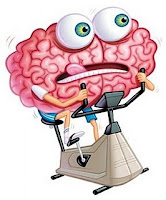
Yep.  No more dumb jock jokes I guess.

They say that scientists used some new technology to examine the workings of individual neurons and the makeup of brain matter itself and discovered that exercise appears to build a brain resistant to shrinkage.

Whoa!  Brain shrinkage?!  I knew that after kids and after ooh, a certain age, my boobs might head south…but now this?

I know the point was to show that exercising is good for the whole body-muscles and circulation…and now brain function…but did they need to tell me my brain is shrinking?  (Good news is its only 1%.)   Better news is that I can stop doing those boring crossword puzzles and playing board games designed to build your brain.  According to the NY times, “The latest neuroscience suggests that exercise does more to bolster thinking than thinking does.” Aah. this IS exciting news.

Professor Rhodes, in the Psychology Dept. at the University of Illinois led a team of researchers to observe groups of mice in different living arrangements.  One group had exciting colorful environments and interesting flavorful food and drink.  Another group had access to all this plus small running wheels and a third group had no exciting environment nor extraordinary food, and the fourth group had the running wheel but no other toys or treats.

The scientists gave the mice a series of cognitive tests at the start of the study and a substance was injected so the scientists could examine their brain tissues.  At the end of the study the cognitive tests were run and it turns out that the toys and tastes didn’t appear to improve the animal’s brains.  Only those who used the running wheel performed significantly better on cognitive tests.

This got me thinking…While I was sitting on my butt studying to earn my MA degree, all those girls in spandex at the gym trying to pick up dudes while working out could actually wind up smarter than me?!?  Hmm, does this mean that the undergrads who smoked pot might have actually balanced out all the brain cells they snuffed out with all the time they spent at the gym?  I’m sure the scientists weren’t trying to go there but I had to wonder….it was, after all, an animal study and I did attend the ultimate party school for a time…

The real thrilling part of the study overall is that even though the brain, like all muscles and organs does appear to decline in function with underuse and age, neurogenesis (the creation of new cells) can and does occur.  Exercise appears to slow or reverse the brain’s physical decay—particularly in the hippocampus which is associated with memory and certain types of learning.  The rats who ran for a few weeks, as compared to the sedentary ones, had about 2x as many new neurons in their hipppocampi.

That said …Gotta Run..

General Health

More Proof That Being A Mommy Is Good For Your Health!

Ooh goody!

There’s a new study that backs up what I’ve known for a long time – Mommyhood is good for your health!  OK, the study didn’t exactly research mommyhood at all, but it’s precisely what came to mind when I read it.  But the fact that someone paid to do this study at all somewhat proves that common sense isn’t all that common, as they say…(who ever “They” are).

The Atlantic ran an article on a study that was done showing essentially what the title says, “He who sits the most dies the soonest.”

I know what you’re thinking… Oh, there goes the media again telling us to do something simple like “just take the stairs” again… rather than actually work out.  (I don’t mean being on the elliptical with a copy of Vogue on the screen either, when I say work out).

Actually, the study shows that getting up and moving around as part of your daily life, not necessarily just exercise time, is what’s needed to reduce the risk.  Regular exercisers did fare better than exclusive sitters, but both groups don’t do well when they sit for as long as most of us do while making a living so we can ‘um.. “survive.”

That means to me,  that stay-at-home moms should live to a nice ripe age!  Have you ever tried to complete one simple task while taking care of children.  It’s impossible.  You can’t actually sit and accomplish anything for longer than 2 hours (and you’re lucky at that) without an interruption that likely requires you to get up and do something.  Housework involves plenty of bending and moving.  Getting toddlers from point A to point B is like herding cats!  Nevertheless, a few years ago at my yearly physical, my doctor asked what I did for exercise.  I looked astonished and said, “I chase toddlers.”  He said my cholesterol numbers showed that wasn’t good enough.

What I’m saying is for optimal health, you still have to work out…but the article shows that just because you work out doesn’t mean you can sit on your butt the rest of the day!

Diet

Stupid Stuff Fat Chicks Do…And Why We LOVE It

How about starve yourself before your wedding in order to fit into your wedding dress?  The New York Times just published an article that seemed to celebrate just that!

Apparently, it can be done any number of ways – Master Cleanse, Feeding Tube, HCG diet.  Basically its restricting your calories to the point where your body uses its own muscle for fuel.

Let’s face it, if you’re eating at a calorie level below which your body needs to simply sustain its essential functions like breathing and sleeping and digesting, its shutting down your metabolism. The body goes into a kind of starvation mode. Then when you stop all that nonsense, the body thinks uh-oh, what if we go into that kind of famine again. Better hang onto some extra fat stores just in case…and while I’m at it, why not just make the whole operation a little slower because you never know when she might starve us again.

So while this article is all chipper about how wonderful this or that gal is gonna look in her dress, they don’t show how every day, shortly after that feeding tube comes out or she eats, say 1200 whopping calories she’s gonna start gaining weight. (For those who don’t know, 1200 calories is pretty low, but still safe.)  Can you imagine dating a woman 159 lbs, marrying her at 120 and then a month after the wedding she’s 140? It could happen.  Is that grounds for annulment?  I mean, who is this person anyway?  Fat, skinny?  Skinny fat (that’s fat by body fat percentage even while looking lean).  Healthy or not?   Maybe the thing the groom’s sure of is that he’s marrying a woman who is willing to actually starve herself for vanity’s sake. Wow, how’s that for for being a top thing to look for in a spouse you hope to grow old with, bear children with and go through all of life’s ups and down’s with?

How about this article …about a woman who ate garbage..and died early.  Really.  This is newsworthy?  All I can say to that is Duh!

So why are we obsessed with hearing about this type of stuff and what makes it so newsworthy?

Basically, America seems in many ways to still be an extension of ancient Greek society, which placed its emphasis on the body. We’re obsessed as a culture with external beauty.  We’re impatient, too.  So we love to hear about the quick fix.  Working hard at the gym and eating real food doesn’t make for sexy journalistic fare.

Oh, and the article about the woman who died of Coca Cola ingestion?  Well, we love that because it allows us to forgive ourselves of our petty indulgences because we relish knowing we’re not as extreme as THAT woman.  We love knowing as bad as our binges can get, they’re still not THAT bad.  Right. Reality check—-they ARE!

No excuses.  Get back to the gym.  Bikini season is around the corner.

Diet

DAIRY – Is it GOOD or BAD for Weight Loss?

Question:  There are so many confusing statements out there.  Is Dairy going to help lose weight or is it better to stop having it?   Pam, Los Angeles

Answer:

Great question Pam.  I hear this type of question from time to time –  should I eliminate this or that food group.  This time it happens to be about dairy.

Let me preface what I’m about to say with the caveat that I’m not a registered dietician nor am I a physician.  These are the professionals specifically qualified to be answering diet-related questions when it comes to your situation and I am able to refer clients to people I trust in those fields if you’d like.  I am someone who has read a lot about health and fitness who is able to read a scientific study with an eye for bias and someone who has tried to fine-tune her own diet and fitness plan for optimal results.  I’m a certified fitness instructor so this is more of a personal than a professional opinion.  That said, these are my thoughts:

I’m just not an all-or-nothing type gal when it comes to dairy and weight loss.  If you want to go cold-turkey on something for the sake of your health, I’d pick soda (diet & regular) or trans-fats and luncheon meats with nitrates!…but dairy?

I go organic (got enough hormones already thanks), low fat (for the calorie count and fat ratio to the rest of my diet mostly) whenever possible and figure it into your calorie allowance.  If you are struggling with a cholesterol issue and your doctor has recommended to limit your consumption of animal proteins, surely listen to his/her advice.  Also if you’re lactose intolerant or vegetarian for ethical reasons, there are many non-dairy alternatives you could choose…

That said, nothing I have read indicates there’s something about dairy which leads to weight gain or retention specifically.  In fact quite the opposite is true.  There have been a few studies which show eating yogurt is good for weight loss.   F0r instance, a Harvard Study published in 2011, showed positive results for weight loss by those who ate yogurt as opposed to those who don’t.  Another, in 2005,  showed the same, but the study was funded by General Mills, makers of Yoplait.   Those are off the top of my head and there have been many more.

That’s not to say I’d go ahead and eat 1200 calories per day of hard cheese…but consumed as part of your diet which is based on fruits and veggies and complex carbs/fiber, I don’t see an issue.

Everything I have studied indicates eating clean and working out with the right cardio and weight training balance and burning off 3500-7000 calories per week through diet and exercise is what makes you lose weight in a healthy safe way.

I’m just not up for the “eggs good for you/bad for you” saga.  I don’t see how you can go wrong with healthy, real food.

Fitness Goals

How Fast Do You Get Out of Shape?

Sometimes holidays, an injury, travel plans, or prenatal nausea takes us off the workout wagon.  Or maybe it’s that taking the day off turned into a week or more.  So how much does this affect your strength training and weight training gains?

According to the Aerobics and Fitness Association of America, Cardio-respiratory fitness generally appears to decrease only after 2-3 weeks without training.  Muscular Fitness (strength/endurance) generally appears to decrease after 2-3 months without training.*

Individuals vary.  You may find performance may decrease without a noticeable visual decrease in muscle size for instance.  Also, there’s the principle of adaptability – that if you’re used to swimming, you may not see as much decrease in your ability to swim, but you may find a bigger decrease in your running.  Some studies show that conditioned exercisers are more likely to gain back the strengths they had more quickly and lose them more slowly than less regular exercisers.

What does this mean?  Keep moving!  If you’ve fallen off the workout wagon or holidays derailed your workout train just get back on asap.

*Fitness Theory and Practice, 5th Edition, Aerobics and Fitness Association of America, ed. Laura Gladwin, p. 186

Flexibility/Stretching, Q&A

Stretching: When, How, and for How Long?

Stretching: When, How, and for How Long?

Most exercisers know that flexibility is an important component of fitness. Stretching can not only prevent injuries, but increase blood circulation, increase your range of motion, and improve your performance. What many exercisers don’t know is when to stretch and for how long.

Adding to the confusion, is the controversy which has arisen in the fitness industry itself regarding whether or not to include static (non-moving) stretching in the warm-up.  According to the Aerobics and Fitness Association guidelines published in 2010, light, preparatory stretching is optional during the warm-up. based upon the needs of individuals the activity or environment. *  More intense stretches held longer than 15 seconds belong at the end of the workout or during the cool-down phase.  Aside from the controversy surrounding static stretching during a warm-up, exercisers can also do dynamic stretching and/or movement rehearsal as part of the warm-up. Examples would include shoulder circles, side to side lunges, and other fluid movements.

I remember the days when we would commonly stretch before the warm-up…on cold muscles. The problem is cold muscles are more prone to over-extension tears, strains, and other injuries. Once blood is flowing and the heart rate is elevated, muscles can be stretched more safely.

If you have a fitness question you would like me to answer please send an email to Questions@GetFitWithKayla.com

*AFAA Basic Exercise Standards and Guidelines Reference Manual. Fifth Edition 2010 p. 26

Uncategorized

Just Breathe

Just Breathe

 You probably heard that breathing is important during exercise. Maybe  your aerobics instructor cued you to breathe or your karate instructor told you to exhale as you kick or your yoga teacher wanted you to breathe into a stretch. Maybe you are thinking it’s a bunch of hogwash and of course you’re breathing or you wouldn’t be exercising, you’d be dead…So why all the reminders?

Breathing correctly not only ensures you can get a better workout, but keeps you safe too. If you hold your breath during exercise or breathe too rapidly, you can suffer ill effects.

If you hold your breath while exerting yourself in weightlifting, doing abdominal exercises (your bodyweight) or just shoveling snow and other strenuous activities, even healthy individuals can possibly experience slowed heart rate, dizziness, or even fainting. Those predisposed to heart disease could experience irregular heart rhythms and more serious consequences…all because of the changes inside the body which can interrupt blood flow. To avoid this issue, breathe in and out at a normal pace. Exhale when lifting the weight (contracting the muscle) or exerting yourself and inhale when at rest or releasing the weight.

On the flip side, I have sometimes see individuals or even fitness instructors breath too heavily or cue breathing every few seconds and normally conditioned people could get dizzy or have other consequences of over- ventilating. Keep in mind when an instructor asks that you breathe into a stretch for instance, this is an indication that you should relax into the stretch, not hyperventilate…breathing slowly and exhaling while deepening the stretch is common in yoga.

Breathing can also be used to assess how hard you are working. For instance the talk but not sing test is a good indication your breathing is right on track for a moderate exertion level. If you can carry on a conversation with ease, or sing well, you are not working hard enough but if you are working so hard you cannot catch your breath you may be working too hard.

If you experience shortness of breath, wheezing, fatigue, chest pain and/or coughing, you should consult your Dr. These may be symptoms of exercise-induced asthma.

Take a deep breath, now exhale. Feel less stressed? Not yet? Then go work out.

Diet

10 Strategies for Keeping Your Figure and Enjoying the Holiday Party

Purim, Passover, and Easter are nearly here, and although they can be a lot of fun, all  holidays,  can be stressful. There’s the preparation, cleanup, and interactions with relatives who may not be supportive of you or your healthy diet plan; then add to that treat foods which lure us with memories of childhood, or heartwarming traditional foods associated with those holidays like chocolate filled marshmallow eggs or hamentashen cookies that just aren’t around all year long. It seems temptation is lurking at every turn. It’s easy to get overwhelmed. You might find yourself unwittingly succumbing to the temptation to binge on those treats or over- eat at the buffet. ..Even though you know you’ll be disappointed when you see the numbers on the scale a week later.

In order to not blow all the hard work you have been doing, it’s a good idea to become mindful of the caloric impact of  various foods and situations you will likely encounter so you can plan accordingly. You need a strategy.
Here are 10 tips to help you survive the holidays with your head held high and your bottom zipped securely into your skinny skirt:

  1. Don’t arrive hungry!  If I know the meal will be filled with things I’d rather not eat..or a ton of things I would rather eat but won’t be proud that I ate so much of them a week later– I might down a protein shake an hour before the meal and spoil my appetite. Drink a glass of water before hitting the buffet to help fill your tummy, or add to that water a scoop of psyllium husks (a fiber supplement that can be found at health food stores).  Eat normal meals through the rest of the day that are healthful but slightly lower in calories.  For instance, if you trim 100 calories off breakfast and lunch and a snack, you can indulge in a 300 calorie treat without impact.
  2. Exercise! Burn off the extra calories before you have them & keep your metabolism up.
  3. Don’t hang out by the buffet. Focus on being social.
  4. Eat your greens first, before the higher calorie foods like proteins and desserts. If you must graze, make it at the veggie platter.
  5. Choose well. Grilled, boiled, baked or broiled and steamed  will be lower on fat ad calories generally.  Fried, sauteed ( in fat/oil), dressings, cream sauces, Au gratin (a cheese sauce) will have a higher fat and calorie impact.
  6. Offer to bring a dish. Almost any dish has a healthy version. Just google healthy version and name the dish and you will have a plethora of options.
  7. Don’t deprive yourself! Plan your indulgences. Enjoy in moderation. Have that cookie (not 12) and savor it. Eat it slowly, on a plate, sitting down. Maybe even try eating the main meal on a smaller plate for that matter- to control your portion sizes.
  8. Easy on the alcohol.  Alcohol’s hormonal effects which can make you store fat … this is on top of the plain caloric impact and relative lack of nutritional value.
  9. Keep yourself accountable. Keep a food journal and log what you are eating. There are calorie counters on line and even diet journal apps for your smartphone so you can log right there in the buffet line. Lose It is my favorite.. You can even scan the bar code of those chips on the table and know immediately how to fit them into your calorie allowance.
  10. Holiday stress can make you release the hormone grehlin which makes you hungry, and the stress hormone cortisol which can make you pack on the fat. Consider lessening your commitments and obligations so you aren’t pressed for time and will have enough sleep and mental clarity to withstand temptations that threaten to destroy your new good habits.
General Health

Are You Getting Enough Sleep?

When you have enough sleep, cognitive and metabolic systems are humming smoothly but when you don’t have enough, you begin to accumulate a debt which some research shows has very negative repercussions. Below 7 hours a night puts you at much greater risk of cancer, heart disease, stroke, depression and weight gain (Michaels, Jillian. Master Your Metabolism. 2009. Crown Publishers. p.190).

Even just one night without enough sleep can affect your mood and appetite, along with your ability to think clearly – like clearly enough to make healthy food choices.

When you don’t get enough sleep it causes your body to release more of the hunger hormone ghrelin, which makes you feel hungry, while it decreases the hormone leptin (known for making you feel satiated or full). Blood sugar levels can rise and one Chicago study showed you can become more insulin-resistant, even if you aren’t overweight or diabetic.

During sleep, you release human growth hormone HGH which helps you burn stored fat!

Schedule eight hours of sleep for health and happiness. Better yet, have a consistent bedtime every night.

To learn in depth about many other risks and benefits of sleep, read: The Promise of Sleep by William C. Dement

Additional Reference:
Associated Press. “Irregular Sleep Tied to Obesity, Other Health Problems” USA Today, May 7, 2008.