Exercise, Fitness Goals

How to Stay Fit During the Jewish High Holidays

How to Stay Fit During the Jewish High Holidays

Oftentimes we think there’s so much to do to in the days and weeks preparing for the Jewish High Holidays that we simply won’t have time for exercise.

Even the most disciplined women find it difficult to maintain their exercise routines due to schedule and eating changes during Rosh Hashanah, Yom Kippur, and Sukkot.

As a personal trainer, even I struggle with keeping up my exercises during this time. However, it can be done. I’m going share the strategy and mindset that my training clients and I use. It’ll help you emerge renewed and re-energized about working out.

Set workout goals for the year

My religious teachers recommended using a notebook dedicated to logging what spiritual changes I wished to make in the coming year before each Rosh Hashanah.

I also track similar goals for my nutrition and exercise in a notebook. With your objectives in writing, you can re-read and re-evaluate them during the year to keep yourself accountable.  

Schedule your workouts

Source: Bendiful Blog

I put my workout into my schedule as if it were any other kind of appointment. If your lifestyle defies regular appointment style scheduling, do your exercise intermittently around the tasks of the day.

For instance, perform 10 squats at the top of every hour, or three modified push-ups before switching cleaning tasks. If you don’t have time for a regular 30-60 minute workout, know that even 5-10 minutes of exercise in a day is better than nothing.

Work out whenever, wherever
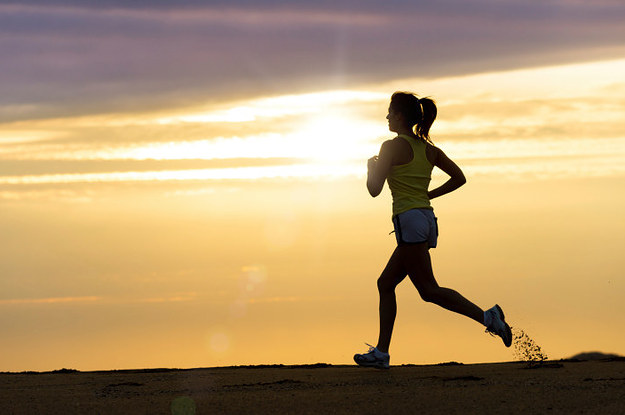
You do not need a gym in order to work out! My favorite exercises when I’m in a time crunch are body weight based moves like push-ups, planks, crunches, and squats because they can be done virtually anywhere, with minimal space, and no equipment.

Walking while introspecting is a great way to prepare for the seriousness of the Jewish High Holidays, and getting outside in the sunshine is one of the best ways to reset your internal clock and lift your mood.

Work out with the family

Source: Today

Got kids? Jump rope and tag can be fun full-family activities. Hiking, biking, and boating are ways to stay active on Chol HaMoed followed by stretch out time in the Sukkah.

Give yourself some slack

One of the beautiful things about the Jewish tradition is that by observing the holidays we’re practically forced into some degree of moderation which is, in itself, a key to good health. Know it is OK to take a break! Our creator made us perfectly imperfect. Nobody stays on track all the time.

If your exercise needs to take a break for a few days or you eat a little more, don’t beat yourself up about it. Instead, remind yourself that taking care of your health by exercising is a way to show yourself love, not to punish yourself, and get back on track as soon as you can.

Now, here are some exercise ideas for the Jewish High Holidays.

Squat

Begin standing with feet facing forward. Legs shoulder width apart.

Shift your weight into your heels and inhale as you sit into an imaginary chair. Working within your comfortable range of motion, try to get your thighs parallel to the floor while keeping your knees behind your toes. Exhale as you stand to complete the movement.

This exercise strengthens the top of the thighs and buttocks.

To progress this exercise to a more advanced/level 2 option, it can be performed as a Jump Squat instead. Begin as above. Standing. Feet shoulder width apart. Shift weight into your heels. Inhale as you sit into an imaginary chair. Aim to make your thighs parallel to the floor. Don’t be shy about sticking your butt out to keep your knees behind the toes. Exhale as you jump.

Bridge

This exercise targets the hamstrings and glutes. Begin lying on the floor on your back. Feet flat on the floor. Legs hip width apart. Exhale as you squeeze your glutes and raise your hips off the floor. Inhale as you lower the hips back toward the door low enough that you could slide a piece of paper between your tush and the floor but don’t let your tush hit the floor. Repeat.

Plank

Planking targets the core. Begin prone (on your tummy). Elbows directly under shoulders. Toes flexed ball of the foot on the floor. Exhale as you draw your belly button toward your spine. Create space under your arm pits. Firm your glutes. Relax the shoulders back and down away from your ears. Lengthen through the crown of the head. Keeping ears, shoulders, hips, and knees on one straight line breathe steadily and evenly. Hold this posture for 8-30 seconds.

Side Plank

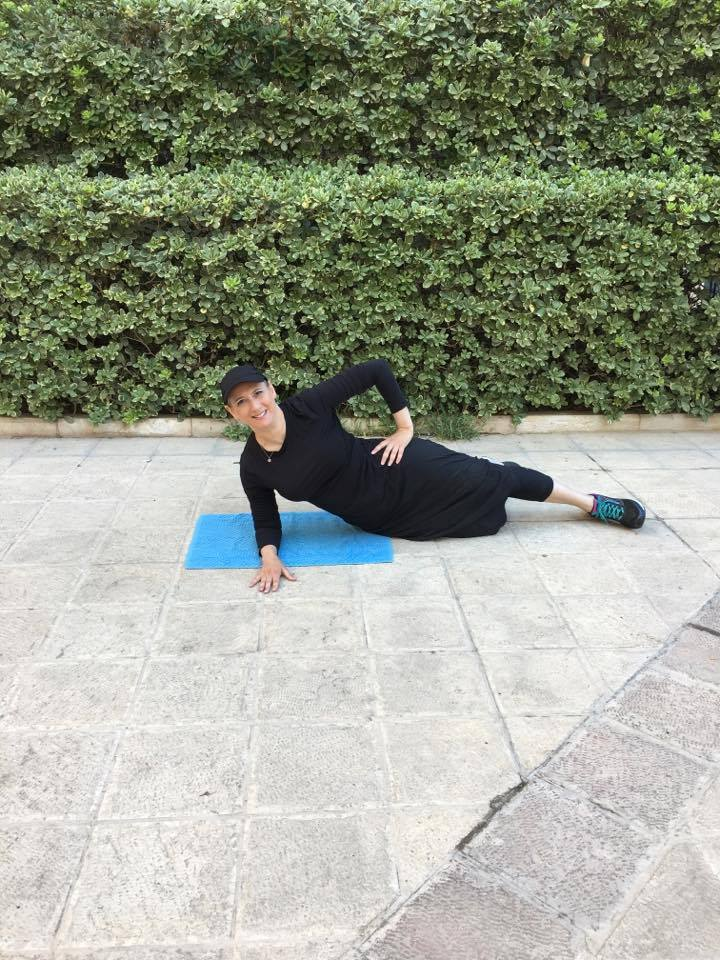
Side planking targets the obliques. Also works shoulders. Begin side-lying. Elbow directly under shoulder. Hips and knees stacked. Bottom leg bent. Top leg straight with foot on the floor. Spine in neutral.

Exhale as you lift the hips off the ground. Keep your abs engaged. Create space between your ribs and the floor. Leave the bottom knee and the top foot pressing onto the floor as you maintain your hip lifting. Inhale back to start. Repeat. Lifting and lowering the hip. Repeat on other side.
Modified Push-Up

Targets the anterior deltoid/front of the shoulder. Triceps/back of the arm and pectoralis major/chest. Begin on all fours/in tabletop position – hands and knees on the floor. Hands wider than shoulder width and fingers spread. Hands are about parallel to shoulders. Keeping your belly button drawn in toward your spine, shift your hips forward so your ears, shoulders, hips, and knees form one straight line.

Inhale as you bend at the elbow lowering your body toward the floor. Aim to lower the body such that a small orange could fit between your chest and the floor. Exhale as you straighten the elbows and push back up to start. Keep your spine in neutral by drawing your belly button toward your spine throughout this movement. Do not allow the low back to sag.

Keep ears, shoulders, hips, and knees in one straight line from beginning to end during this movement.

Seated Twist

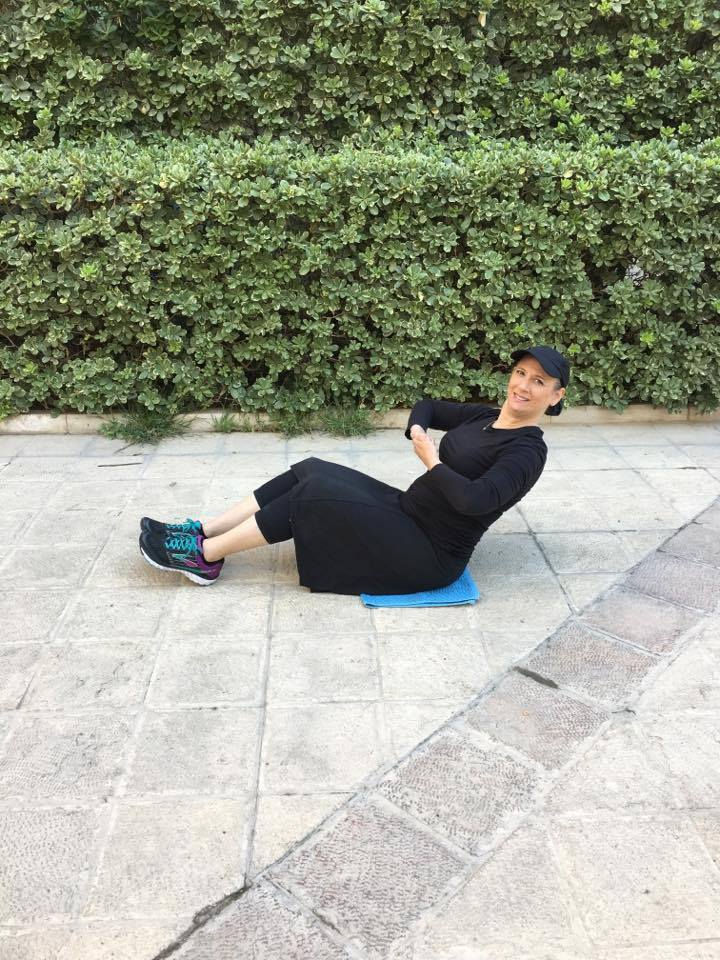
Targets the abs. Begin seated. Heels on the floor. Legs together. Knees bent. Interlock your hands. Lean back with a neutral spine until you feel your abs engage. Twist slowly side to side.
Getting started

These six exercises work the major muscle groups with a focus on abs. They can be performed consecutively for 8-12 repetitions each as a complete circuit. Alternatively, they could also be performed with a timer for 30-45 seconds per exercise with a 10-15 second break between exercises. Be sure to listen to your body. Take it at your own pace and modify as necessary.

This circuit is designed for ladies without knee and/or low back issues. Always listen to your body. Check with your doctor before beginning any exercise program.

Happy working out!

Originally published in Jewess Magazine on י״ז באלול ה׳תשע״ז September 8, 2017
Exercise, General Health, Motivation

Vanity Can Save Your Life


Can Weightlifting Help with Fine Lines & Wrinkles?

The short answer is YES!!!

I will admit, being in midlife has made me more vain. I am suddenly aware of the loss of firmness in my face and neck and the permanence of some (gasp) wrinkles. Although I’d had a face like a permanent oil slick during puberty and pimples galore it didn’t mean I skipped the wrinkles for having endured it. So when the opportunity for a free mini-facial presented itself at my local Spa, I took advantage of the pampering but didn’t expect anything other than a shiny face. Afterall, everyone knows exercise is supposed to really be the fountain of youth but my textured skin was something I was stuck with, so I thought. What learned has really changed my skin and my lifestyle.

I had thought that I had to live with my sunspots from using inadequate sun protection, and scars from those years of acne but I have since learned that with consistency, there are some very good products on the market now which can make things a lot better. Many people however, give up on them before seeing results which may be good but not give you say Jennifer Aniston’s face. Better than what you have now might take consistency and discipline in a skincare routine- which I haven’t had. However, in the hands of an expert, I sampled what it could feel like to have smoother skin and decided even if I didn’t reach skin perfection, even a little better was worth the effort. 

For instance, I learned that Retinol (not recommended while pregnant) can resurface the skin and smooth pores and vitamin C can diminish the darkness of those sun-spots. However, it would take an investment of time and consistency and a little money. However, I’m at a point where its worth the investment. I think it will be empowering to be putting my best self forward. Even if it doesn’t make me a super-model, it will be my personal best and will likely enhance my self-esteem. Retinol can take 4-6 months to show any results and they may be subtle, so taking before and after pics are recommended. More people are probably following a skincare routine than a workout routine but the effects of each can be remarkable. We want and expect instant results, but sometimes it takes a professional to help us pinpoint the specific things that work best for our unique skin and save us time and frustration of going it alone or helping with the discipline to stick to it. 

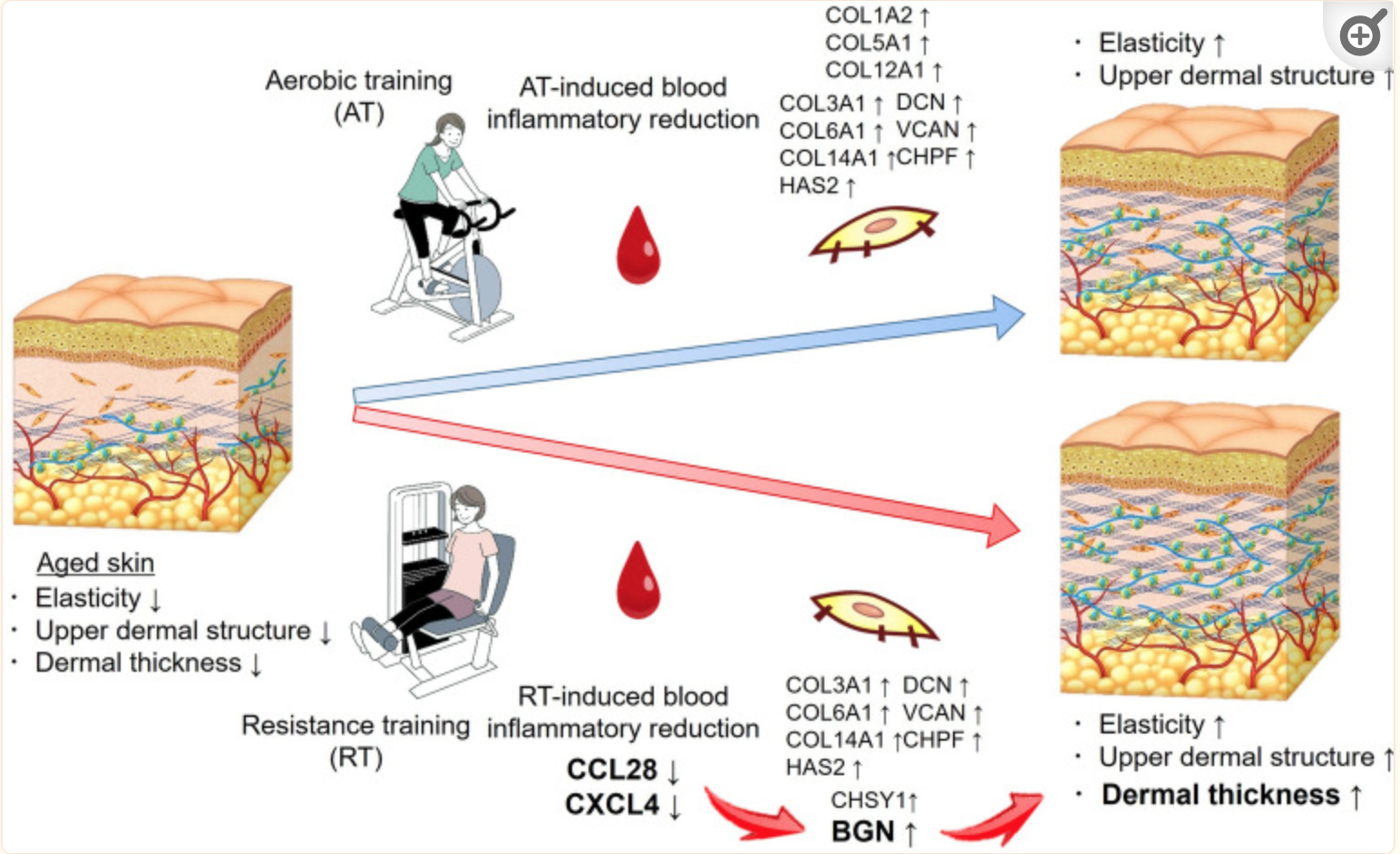
That said, there’s even better news that came out in the fountain of youth dept last week! A new study looked at endurance cardio training like cycling vs. resistance training. The study involved 61 sedentary Japanese women mostly in their 40’s and got them working out twice a week. They hooked the ladies up to fancy probes and ultrasound, took blood samples and looked at dermal thickness. 

Inflammatory markers were down and growth factors were up. Elasticity of the skin improved with both resistance (ie. chest press, shoulder press, curls) and endurance (cardio) training. Dermal thickness and collagen increased with WEIGHTLIFTING! So with increased elasticity and increased dermal thickness we get less fine lines and wrinkles.

I do find this very motivating though we could use a larger scale study to replicate these findings. We already know all the ways exercise prevents heart disease, cancer, and diabetes. It can prolong your life. In my mind, if you combine your skincare routine, weightlifting, good nutrition and regeneration, you have a recipe for the fountain of youth! Maybe its not so bad to be vain.

I hope you found this motivating. If you need to sample how wonderful working out can make you look, feel, and perform, treat yourself to a session or a mini-session 1:1 or come to my class this week.

Exercise, General Health, Q&A

All About Sneakers.. and Vulnerability


I just LOVE new sneakers. It tumbled out of my mouth today while in session with a client. I just realized I’m probably a bit more enthusiastic about this than your average person– and typically when our reactions are out of proportion there’s a historical aspect for us in that area, perhaps something traumatic. I almost held back but decided if I show up authentically without shame and shared my story, maybe it will help me or someone else to shed some needless shame.

When I was a little girl, my feet were so narrow I had to shop at a specialty shoe store where kids with wide feet and narrow feet and old people needing orthotics shopped. Some had feet so swollen they looked like bricks. I wanted so bad to wear Nikes like everyone else with medium feet and shop in a regular store. Shoes didn’t fit me right and it was hard to be comfortable. Still is; but one summer in an effort to try and get my feet to spread I wore moccasins. The front of my feet did spread but the heel didn’t, so I have narrow heels and need a shoe with a wider forefoot to make me comfortable but learned how to tie shoes in a runner’s loop so the heels don’t slip and now I can wear sneakers from lots of brands.

The pleasure I get from the comfort of new sneakers is enormous probably because of all I have had to go through. Well, it turns out my client then shared that her kids suffer with narrow feet and her boys have difficulty with heel slippage. I was able to share the special way I tie my shoes with her and save her kids from those heel blisters.

So basically because I was willing to be a little vulnerable, someone else didn’t have to suffer. The message: Be courageous. Healed? Pay it forward!

When your heel isn’t held firmly, your foot can slip forward and bump your toes against the front of your shoes. 

Your fix is the Runner’s Loop:

  1. Lace your shoes normally, crisscrossing them until you reach the second eyelet below the top on each side.
  2. Instead of crossing over again, pull each lace end up on the same side, inserting it into the top eyelet on that side; you’ll form a loop.
  3. Pull each lace end across and through the loop formed on the opposite side of the shoe.
  4. Pull the lace ends up and out a few times in order to shrink down the loops so that they hold the lace securely on each side.
  5. Finish by tying your shoelaces in the usual way.

Many shoe designs are built specifically to allow for the runner’s loop: They provide extra length in the laces and specific alignment of the last eyelets to give you the option of tying it.

Sneaker sales are historically on in January and April and you should replace your sneakers every 4-6 months depending on usage. Running shoes should be replaced every 300–500 miles. That’s because it’s around this point that the midsole cushioning on most shoes will lose resiliency and stop absorbing shock as well as when newer, which can cause more impact on your muscles and joints. This means that if you average 15 miles of running per week, then you’ll need to replace your shoes approximately every five to eight months. (If you track your runs with a GPS watch or your smartphone, it’s simple to figure out when you’re in the 300–500-mile range; otherwise you can estimate based on roughly how much you run each week.)

Here are additional factors that affect when to replace your running shoes:

  • Minimalist shoes have less cushioning, so expect them to be done around 300 miles.
  • Traditional running shoes and maximum cushioning shoes tend to last until around the 500-mile mark.
  • Heavier people will get fewer miles than lighter people, regardless of shoe type.
  • If you wear your running shoes casually, those miles also count toward the total.
  • Dirt on your shoes is no big deal, but if you see significant wear and tear, it may be time to retire your shoes. Keep an eye out for heel damage, worn soles and rips and tears.
  • If you notice new discomfort in your feet, legs, knees, hips or back after running, it may be time for a new pair of shoes. The same is true if you’re getting blisters or feeling hot spots where you never used to.

Q: Do I need Cross-Trainers?

Cross Trainers offer more lateral (side-to side) support than running shoes. Cross trainers allow for quick pivots, stops and starts whereas running shoes are often slightly elevated in the heel. An elevated heel in a running shoe helps propel a runner forward but doesn’t allow for the same side to side support in the forefoot needed in many HIIT workouts. It also shortens the calf muscle similar to a formal dress shoe or pump. This prohibits the athlete from achieving a full range in the squat or the lunge or the dead lift. I do suggest wearing cross-trainers for most personal training sessions and group fitness classes. There are a number of companies that make cross trainers and I don’t have a particular preference on brand. Find what fits well.

I have recently tested a few. If you have never tried a cross trainer or want to feel for yourself what qualities I have in mind for a good cross trainer in general for any of the workout classes or trainings I teach I have listed below, some good ones to try. When you try sneakers for cross training or any sport, practice the ways you will use those sneakers in the store! Yes, you may look a little funny, but its an athletic store and it only takes a few seconds to jump, do lateral lunges and pivot.

Nike Zoom Super Rep Go 3 Flyknit
Nike Free Metcon4 (11 different colors for women)or Metcon 5 (comes in 5 colors for women). I love this one for Metcon workouts, HIIT etc if it fits your foot and you like a sock type feel with a lot of flexibilty in the forefoot. Be prepared to try different sizes.
Nike Air Zoom Super Rep 3
Nike Renew- good for NARROW feet (I prefer the older model without the stretch strap across the top [seriously, what were they thinking?] which can still be found at Citadel outlets in White only)
Nike Air Max Bella Tr 5 Premium- only recommended for WIDE feet

I generally find Nike to run a little shorter heel to toe/smaller than some other brands. Keep this in mind and know that different models have variations as well. I like to order a couple sizes and select which is the better fit- which is typically a half size larger than your dress shoes. These are fairly easy to find around SoCal. Footlocker, Nike at the Grove, most malls will have one or more models.


ASICS only makes one shoe line that is suitable for training and is able to adequately support lateral motion. The Gel-Quantum series (360, 180, 90) are cross-training shoes that can be used for gym workouts such as lifting, cross fit, HIIT, P90X, Zumba, aerobics, or general sports activity. These shoes are not available in wide widths. I personally prefer the cushion and bounce of the 360 which has gel throughout the bottom for an extremely springy and resilient feel. Sizing is pretty true. I take the same size in Asics as Nike however the Asics generally offer more toe room. Since the Asics store in Century City closed, they are difficult to find in SoCal. Try the Asics site, Amazon or Zappos. The version 6 and the 7 are recommended in the Quantum 360. Color choices are somewhat more limited but something should suit as they’re not too crazy.

Reebok recently released the Nano3. It has a slightly different sole than the Nano2 which I found had an excellent fit for many types of feet and plenty of lateral support. It was a more grounded feel shoe overall and recommend if you prefer a firmer stiffer ride. The Nano 2 or 3 would be great for heavy lifts due to the flat rise on the sole. I also like these for boxing/kickboxing since I can pivot easily on some surfaces and yet allow for lateral support for quick stops and starts and lunges. In the x2 I took my regular size (which is a half size up from my dress shoes) whereas in the x3 I took the same size as my dress shoes (so they do run a little large IMO) The nano 3 also has an extra hole for a runner’s loop if you like to lock your ankles down a bit more. Both nano 2 and 3 feature a wider toe box and the shape of that toe box is slightly narrower on the side of the 3 than the 2 but both are the wider and roomier than many cross trainers on the market now. They also come in 10 colors for women and 14 colors for men!!!! Can you resist a lilac sneaker? They can be a little difficult to find in SoCal. I recommend the Citadel Outlets since they sometimes have them on sale or you can find the Nano2 if you are more budget conscious. DSW sometimes has as well.

Ryka makes good cross trainers. They design shoes specifically for women. Difficult to find this brand outside of Nordstrom Rack or Marshalls locally. Worth a try. They really “get it” when it comes to shoes for specific sports like dance fitness or kickbox or lifting.

Women’s regular is a B width whereas men’s shoes regular are a D width. Keep that in mind should you think your feet run wide or they’re out of your size in another brand.

I love cross trainers for cross training, weight lifting, HIIT, and kickbox. My preferred wear all day everyday or stand and wash dishes or go for a long walk shoe is still going to be a running shoe or at least a walking shoe with good stability.

Exercise, General Health, Q&A

Is it OK To Exercise When I have a Cold?

(Also appeared in LA Jewish Home 1/12/2022 p.34)

Before the ink dried on my own new year’s fitness resolutions, the universe conspired to give me a one-two punch right back into bed with a cold. That got me thinking about the time back in college when I saw others “push through” a cold with exercise. My try at the same routine, back then, landed me in the infirmary with a case of mono. So, is it a good idea to work out when you’re sick or not?

The answer is clear – yes and no!  Now that fitness is my career, I see a lot of objective differences between “working out” and physically moving the body, and it’s not just because “your workout is my warm-up.” [I don’t actually say that.] Seriously though, intensity is subjective and relative to the individual and also plays a role in the decision of whether you should work out with a cold and at what intensity if you do. Whether or not it’s advisable to work out also depends on your cold symptoms.

A workout that makes you breathe heavily, sweat, and work hard to the point of some discomfort, awakens a stress response in the body. When we’re healthy, it is precisely the adaptation to that stress in a progressive way that makes us stronger. Healthy bodies can adapt to that stress. However, the stress of this intense workout can overwhelm the immune system. This isn’t generally recommended when you’re sick. When you train hard, your body needs to repair the muscles that have been worked and this can further weaken your immune system. 

Some find that lower intensity movement including things like:

  • Walking (preferably outdoors)
  • Leisurely biking or swimming
  • Some types of Yoga or T’ai Chi

…can boost immunity and help you recover faster (unless you are out of shape and/or have other stressors). Let your own perceived level of exertion be your guide in determining what is low intensity. 

What shapes this recommendation is the scientific research which shows that when a healthy person exercises consistently and moderately, it strengthens immunity over time. Unusual, infrequent, sudden high intensity, or long-duration sessions can hamper immunity. Even more so, you should take it easy when sick. 

Besides your current fitness level and consistency, consider what other stressors you may be facing on a given day. Anxiety, relationship stress, financial, career, environmental (hot/cold temperature outside), diet, sleep quantity and quality, age, obesity, and many emotional and physical health issues all play a part in your immunity and resilience.

I typically tell clients: Don’t exercise if you have a fever, widespread muscle aches, or fatigue; if your symptoms are “below the neck”—like diarrhea, upset stomach, chest congestion, or hacking cough.

However, it may be ok to exercise if your signs and symptoms are all “above the neck” — symptoms such as sneezing, nasal congestion, runny nose, or minor sore throat. If you choose to exercise when you have a mild cold, I recommend that you reduce the intensity and length of your workout so as not to risk more serious injury or illness. Also, be considerate and don’t contaminate others. Avoid the gym or other public places.

Listen to what your body is telling you! If you feel miserable, take a day off or even a week off. The few days won’t really affect performance. 

Be sure to resume your normal routine gradually as you start to feel better. For instance, if you were sick for 3 days, consider taking 3 days to ease back in. Check with your doctor if you’re still unsure if it’s OK to work out.

If you’re healthy and want to prevent getting sick, the good news is that consistent, moderate exercise most days of the week is preventive for illness. Manage your stress and recovery, especially if you exercise with intensity. Wash your hands.

References:

Laskowski, Edward R. M.D. Exercise and illness: Work out with a cold?

(June 18, 2011) Retrieved from:http://www.mayoclinic.com/health/exercise/AN01097

Exercise, Fitness Goals, General Health, Motivation

Let’s Get Moving: 5 Tips for Getting Back into Fitness

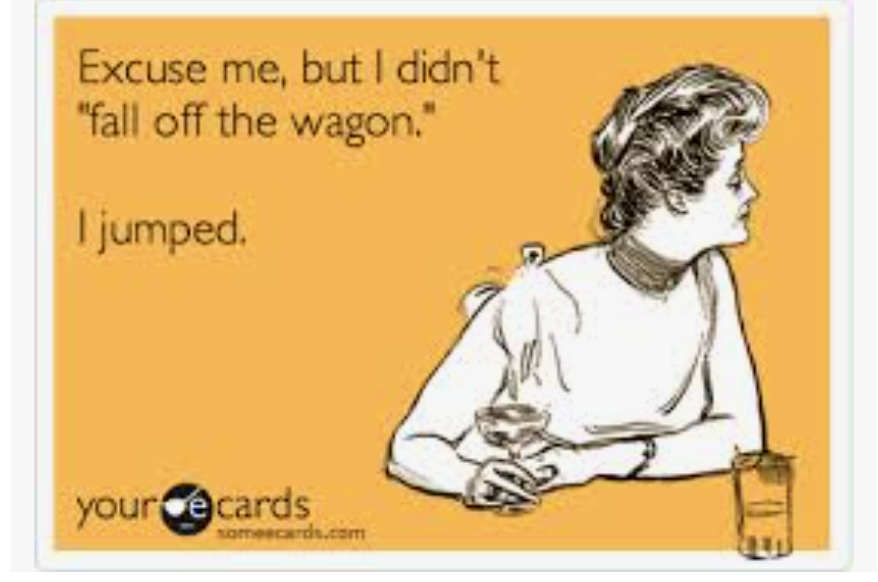
Help, I’ve Fallen off the Exercise Wagon

Screen Shot 2019-10-28 at 11.23.11 PM
How to Ease Back Into Fitness

If you just spent the last month like I did: (a) With a piece of honey cake in one hand and a cup of coffee in the other, (b) Doing an exercise routine exclusively made up of balancing hot dishes on one arm while walking laps in and out of the house, (c) where regeneration activity included multiple hours seated in meaningful contemplation or reading, or… (d) All of the above, plus sullen concerns about your lack of energy and expanding waistline…Then you will want to read on about how to bounce back into working out.

First: Let’s get real about expectations. You will want to pick up where you left off. This generally means you will want to return to the couch (Remember a body at rest tends to stay at rest from physics class in High School?!?) or, You will want to become the quintessential weekend warrior and jump headlong into intense cardio and double sessions in the gym. I want to take this moment to help you pause and do neither of those instinctive but completely unproductive impulses.

Instead, follow my

5 tips for getting back into exercise and fitness in a sustainable way:

1. Prepare for success. Lay your workout clothes and sneakers out before you go to bed. Schedule the workout in your planner and block out interruptions. Do that workout before you have time to think about it…because thinking during the next two weeks (your break back in period) will only get in your way. We want this on auto-pilot because deciding to work out and actually getting there is the hardest part. Short-circuiting the decision part is key. So stack that workout habit on top of some other firmly established habit (like waking up in the morning) and do it in a way that keeps it front of mind- i.e. having the sneakers in your visual space or the phone appointment alarm.

2. Begin the way you mean to go on. Plan on ONE thing you can stick with consistently FOREVER. Maybe that’s a 10 minute walk. Maybe that’s a 10 minute walk three times a week. Maybe that’s a 10 minute walk plus 20 situps and 10 modified pushups and a stretch. Pick that one thing you could reasonably, easily stick with for the rest of your life… and do it consistently for the next two weeks.

Resist the urge to give 110% these first two weeks. You want to work out to a point where you notice there was something happening but not so sore you can’t move (and sometimes you can’t tell because soreness doesn’t kick in until 24-48 hours after, so it’s ok to do a little less than you think you can that first time.) This is NOT the time to push your limits. You do not want to miss a workout these first two weeks. Consistency IS success. Soreness is not the indicator of success. I’m fairly certain you didn’t plan to go on needing to hold onto the walls easing yourself onto the toilet because …leg day.

3.Figure out your WHY and write that down. Why do you want to get fit? Want to not die so soon? Write it down. Want to look awesome for your niece’s wedding. Write it down. Need to get up the stairs without passing out? Whatever that “WHY” is, figure it out now, and write it down. Read what you wrote down often. Put it in your phone. Make a collage about it. When you have a meaningful reason, you can withstand the discomfort of making space in your life to commit to it.

4. Have Fun. The more fun you have while doing the workout the more you will stick with it. Maybe you fell off the wagon because you were bored. Then try something new- a new class, a new sport, something which used to make you smile but you gave up years ago like dancing in your bedroom like Madonna to show tunes.

5. Get support. Need a sports bra, get it. New sneakers? Need to dial a friend, a counselor, a coach, a trainer? You can’t do this alone. You need support so plan that out. Register for a class or take that walk Wednesday with a friend. Call a trainer or a sports med doc or a physical therapist if needed, so you can move better.

Periods of time off can break a plateau and even help reinvigorate your excitement and desire to exercise. Observing the Jewish holidays practically enforces a degree of moderation, and even regeneration (a key component of fitness), so don’t sweat it. It’s an overall sedentary lifestyle that becomes detrimental for our wellbeing but following these tips will allow you to ease back into sustainable exercise.

—–

Another version of this article appeared in LA Jewish Home October 20, 2022 (a newspaper serving the Greater Los Angeles Jewish Community)

Diet, Exercise, General Health, Motivation, Q&A

Q & A: Can people who exercise “get away” with poor food choices?

My short answer is Yes and No…

In a small study of  two groups of 7 participants, one group exercised for at least 30 minutes of moderate intensity or higher at least 3 times a week. The other group worked out less often and less intense than the first group. 

All 14 participants were fed the same high fat 960 calorie breakfast meal. (2220 mg sodium, 48 g of fat, including 16 g saturated fat and 4.5 g trans fat..280mg. cholesterol)

After the high fat meal, they measured obstruction of blood flow in the brachial artery (-the one just above your elbow crease on your arm)..The less active group showed a greater obstruction of blood flow through the artery- it was narrowed,  while the more active exercisers had no change.

Both groups experienced an increase in triglycerides (triglycerides are an ester of glycerol and 3 fatty acid groups. High levels of triglycerides indicate an increased risk of stroke.) The more highly active group’s triglycerides rose by 47% but the less active group increased triglycerides by a whopping 184%

While exercise is protective against disease, and people who exercise may be more able to get away with poor food choices, but not on a regular basis. 

Johnson, B.D. et al. “Vascular consequences of a High-Fat Meal in physically active and Inactive adults.’  Applied physiology, nutrition, and metabolism, 36, no3. (2011) 368-375

Body Image, Diet, Exercise, General Health

Is Obesity a CHOICE?

Trigger Warning: 

This post involves discussions of Weight. If such topics are distressing or triggering to you please consider employing self-care tools and strategies which may include not reading this.

A February 2021 survey by the American Psychological Association reveals how the pandemic has led to unwanted weight gain.42% of US adults gained unwanted weight during the pandemic.52% of Gen Z adults report undesired weight gain, with an average gain of 28 pounds.48% of millennials report undesired weight gain, with an average gain of 41 pounds.Yet despite these statistics, for better health and a longer life span, exercise is more important than weight loss.

 An interesting new scientific review of the relationships between fitness, weight, heart health and longevity found that obese people typically lower their risks of heart disease and premature death far more by gaining fitness than by dropping weight or dieting.

The review adds to mounting evidence that most of us can be healthy at any weight, if we are also active enough.

Glenn Gaesser, a professor of exercise physiology at Arizona State University in Phoenix (My alma matter, BTW), found overweight and obese people with significant health problems, including high blood pressure, poor cholesterol profiles or insulin resistance, a marker for Type 2 diabetes, showed considerable improvements in those conditions after they started exercising, whether they dropped any weight or not. The studies show that even if no weight is lost, obese and formerly sedentary individuals can  lower their risk of premature death by as much as 30 percent or more.

And now, because the science needs to also explain that water is wet:

“Some past research shows that people who start to exercise rarely lose much, if any, weight, unless they also cut back substantially on food intake because the exercise they are doing burns too few calories and because they compensate for some caloric burn during exercise by eating more calories afterwards.”

This information begs the question: Is Obesity a Choice?

This short answer is..not usually. Sure genetics and bone structure, genes and upbringing play a part. However, some of us eat more and/or move less when stressed or anxious or depressed.. and for others its just the opposite! Some of us find sweet foods satisfying in some situations and salty in others (hint: there are actual biological reasons for craving salty in some situations and sweet in others–and its part of the glorious way or bodies are pre-programmed for survival).

Sometimes people are making choices, but they are only semi-conscious of them-for instance out of self-harm as a trauma response. Other times we don’t even know we are making choices because we are simply unaware of alternatives or we have never been educated about the way that stimuli such as emotions and specific foods trigger different responses within the body that set us up for a cascade of effects that are displayed visually or on our bloodwork results…

Information like how to combine which foods to achieve stable blood sugar and lower insulin response. A sensitive balanced insulin response can increase your sensitivity to feelings of hunger and fullness. That is necessary for true agency in one’s health outcomes (and visual outcomes). Listening to one’s body only works well when the body is working to give us those signals otherwise the whole system is rigged against us succeeding from the start (if our goal is to “listen to the body”).

There is a whole science behind options including which foods to combine or eat and when if you want to decrease cravings overall. Or which foods can make you feel fuller longer or think more clearly or have more energy.  Which type of exercises performed which way for how long will make you hungrier and which will enable you to feel more full after the workout. If you would like to know more about those things, so you are more empowered to make changes smarter not harder,  it is something I coach my 1:1 Private clients on.

Some people say, I can’t train with you Kayla, you’ve never been overweight like me. I have never been you, but there have been times I was overweight (5’5″ 172lb not pregnant, and 175 when pregnant) and I have also been mocked for appearing underweight (young teen), Fortunately I have mostly been in the normal range. I have discovered ways to hack the system both from reading and studying and talking to pros about it to be more stable over time and some of it has to do with hearing relatives who do have a good relationship with their bodies and food while growing up-which helps me reflect back to my clients when something seems off track.  I’ve survived illnesses, injuries, and other setbacks. I’ve had a few pregnancies too…and struggled sometimes there too.  Its important to select a trainer and coach (sometimes a counselor and/or RD) who does get you and who you are comfortable with and have the conversations so it can become more of a choice that your body is rigged to help you with instead of fighting with your body.

Body Image, Diet, Exercise, General Health, Motivation

How to Hack Your Hormones for a Better Mood

This year it seems World Mental Health Day got a lot more press in America. That’s a good thing because its really time to lower the stigma and thereby encourage everyone to get the help they need to to feel good.

So many of us have been affected by lifestyle changes brought about by Covid and I’ve seen many tip lists and articles about how to lower anxiety and increase happiness but some of it is dense and hard to remember so I created this handy dandy chart compiled from some of them. See if you notice what I did:
OK.  Technology wasn’t on the list.  
Did you see how often EXERCISE was on the list?!?

Exercise has multiple physical health benefits. AND it can have a positive impact on emotional well-being.Regular physical activity can increase your dopamine and serotonin levels, making it a great option to boost your happy hormones. In addition, you’ve probably already heard of the ‘high” that many feel from endorphin release intense exercise triggers. 

According to one article focused on using food to boost mood, here’s how to  Maximize the Mood Boosting Power of your workout:

To see even more benefits from exercise:

Include a few friends. A small 2009 study (of men) found evidence to suggest group exercise offers more benefits than solo exercise.

Get some sun. Move your workout outdoors to maximize your serotonin boost.

Time it. Aim for at least 30 minutes of aerobic exercise at a time. Any amount of physical activity has health benefits, but research associates endorphin release with continued exercise rather than short bursts of activity.