
Uncategorized

Surprising Benefits of Exercise During Pregnancy

Exercise is an important part of a healthy lifestyle, and this is especially true during pregnancy. Regular exercise during pregnancy can provide numerous benefits for both the mother and the fetus. In this blog post, we will explore the benefits of exercise during pregnancy and provide tips for exercising safely.

Benefits of Exercise During Pregnancy

  1. Improved overall health: Exercise can help to maintain a healthy weight, reduce the risk of gestational diabetes and hypertension, and improve cardiovascular health.
  2. Reduced risk of cesarean delivery: Women who exercise during pregnancy may be less likely to require a cesarean delivery.
  3. Reduced risk of preterm birth: Regular exercise during pregnancy has been associated with a lower risk of preterm birth.
  4. Reduced risk of pregnancy complications: Exercise can help to reduce the risk of pregnancy complications such as preeclampsia, gestational diabetes, and preterm labor.
  5. Improved mood and reduced stress: Exercise has been shown to improve mood and reduce stress, promoting a healthier pregnancy and potentially easier labor and delivery.
  6. Reduced pregnancy-related discomfort: Exercise can help to alleviate common pregnancy-related discomforts such as back pain, constipation, and fatigue.
  7. Healthier fetal growth: Exercise during pregnancy has been associated with healthier fetal growth and development.

How to Exercise Safely During Pregnancy

Before starting or continuing an exercise program during pregnancy, it is important to consult with your healthcare provider. Your provider can help you determine which exercises are safe and appropriate for you based on your health status and the stage of your pregnancy. Here are some general guidelines for safe and effective exercise during pregnancy:

  1. Start slow and gradually increase the intensity of your workout: If you were not active before pregnancy, start with low-impact activities such as walking or swimming and gradually increase the duration and intensity of your workouts.
  2. Choose low-impact exercises: Low-impact exercises such as walking, swimming, cycling, or prenatal yoga are generally safe for most pregnant women.
  3. Stay hydrated and avoid getting overheated: Exercise in a cool, well-ventilated environment, and wear breathable clothing to avoid getting overheated. Drink plenty of water before, during, and after exercise to stay hydrated.
  4. Some doctors suggest avoiding exercises that require you to lie flat on your back after the first trimester, because it can compress the vena cava, cause nausea, dizziness and reduce blood flow to the fetus and the mother’s brain. Others say that for short periods of time its not an issue. So check with your doc.
  5. Listen to your body and adjust your exercise routine as needed: If you experience dizziness, shortness of breath, increased discharge or vaginal bleeding, stop exercising immediately and contact your healthcare provider.

Benefits to the Fetus

Regular exercise during pregnancy can promote healthier fetal growth and development. Studies have shown that exercise during pregnancy can lead to improved fetal oxygenation, increased placental weight, and reduced risk of fetal distress during labor. Additionally, babies born to mothers who exercised during pregnancy may have better cardiovascular health and improved cognitive function later in life.

In conclusion, regular exercise during pregnancy can bring numerous benefits for both the mother and the fetus. However, it’s essential to exercise safely and appropriately during this time to ensure the health and well-being of both. Talk to your healthcare provider about which exercises are safe for you, and listen to your body to make adjustments as needed. By staying active during pregnancy, you can help to promote a healthier pregnancy and potentially easier labor and delivery.
Exercise, Fitness Goals, General Health, Motivation

Let’s Get Moving: 5 Tips for Getting Back into Fitness

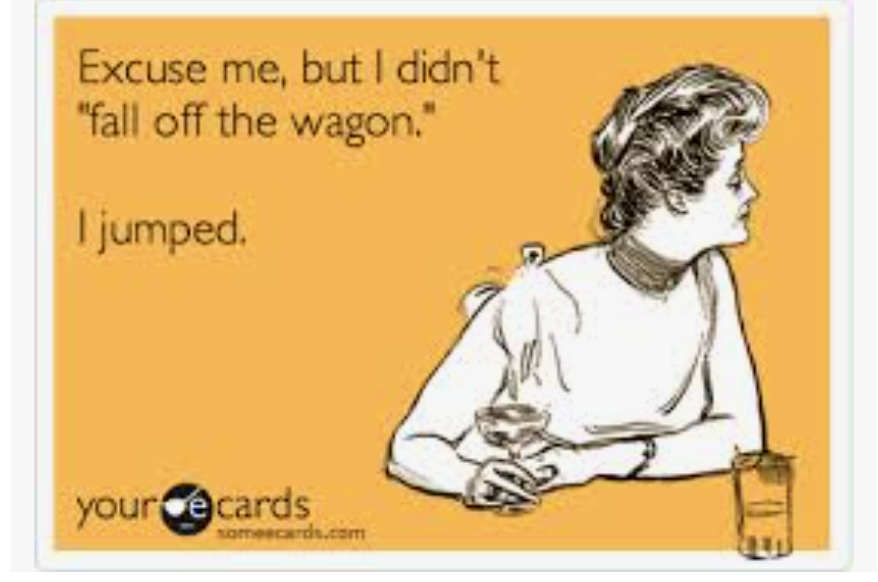
Help, I’ve Fallen off the Exercise Wagon

Screen Shot 2019-10-28 at 11.23.11 PM
How to Ease Back Into Fitness

If you just spent the last month like I did: (a) With a piece of honey cake in one hand and a cup of coffee in the other, (b) Doing an exercise routine exclusively made up of balancing hot dishes on one arm while walking laps in and out of the house, (c) where regeneration activity included multiple hours seated in meaningful contemplation or reading, or… (d) All of the above, plus sullen concerns about your lack of energy and expanding waistline…Then you will want to read on about how to bounce back into working out.

First: Let’s get real about expectations. You will want to pick up where you left off. This generally means you will want to return to the couch (Remember a body at rest tends to stay at rest from physics class in High School?!?) or, You will want to become the quintessential weekend warrior and jump headlong into intense cardio and double sessions in the gym. I want to take this moment to help you pause and do neither of those instinctive but completely unproductive impulses.

Instead, follow my

5 tips for getting back into exercise and fitness in a sustainable way:

1. Prepare for success. Lay your workout clothes and sneakers out before you go to bed. Schedule the workout in your planner and block out interruptions. Do that workout before you have time to think about it…because thinking during the next two weeks (your break back in period) will only get in your way. We want this on auto-pilot because deciding to work out and actually getting there is the hardest part. Short-circuiting the decision part is key. So stack that workout habit on top of some other firmly established habit (like waking up in the morning) and do it in a way that keeps it front of mind- i.e. having the sneakers in your visual space or the phone appointment alarm.

2. Begin the way you mean to go on. Plan on ONE thing you can stick with consistently FOREVER. Maybe that’s a 10 minute walk. Maybe that’s a 10 minute walk three times a week. Maybe that’s a 10 minute walk plus 20 situps and 10 modified pushups and a stretch. Pick that one thing you could reasonably, easily stick with for the rest of your life… and do it consistently for the next two weeks.

Resist the urge to give 110% these first two weeks. You want to work out to a point where you notice there was something happening but not so sore you can’t move (and sometimes you can’t tell because soreness doesn’t kick in until 24-48 hours after, so it’s ok to do a little less than you think you can that first time.) This is NOT the time to push your limits. You do not want to miss a workout these first two weeks. Consistency IS success. Soreness is not the indicator of success. I’m fairly certain you didn’t plan to go on needing to hold onto the walls easing yourself onto the toilet because …leg day.

3.Figure out your WHY and write that down. Why do you want to get fit? Want to not die so soon? Write it down. Want to look awesome for your niece’s wedding. Write it down. Need to get up the stairs without passing out? Whatever that “WHY” is, figure it out now, and write it down. Read what you wrote down often. Put it in your phone. Make a collage about it. When you have a meaningful reason, you can withstand the discomfort of making space in your life to commit to it.

4. Have Fun. The more fun you have while doing the workout the more you will stick with it. Maybe you fell off the wagon because you were bored. Then try something new- a new class, a new sport, something which used to make you smile but you gave up years ago like dancing in your bedroom like Madonna to show tunes.

5. Get support. Need a sports bra, get it. New sneakers? Need to dial a friend, a counselor, a coach, a trainer? You can’t do this alone. You need support so plan that out. Register for a class or take that walk Wednesday with a friend. Call a trainer or a sports med doc or a physical therapist if needed, so you can move better.

Periods of time off can break a plateau and even help reinvigorate your excitement and desire to exercise. Observing the Jewish holidays practically enforces a degree of moderation, and even regeneration (a key component of fitness), so don’t sweat it. It’s an overall sedentary lifestyle that becomes detrimental for our wellbeing but following these tips will allow you to ease back into sustainable exercise.

—–

Another version of this article appeared in LA Jewish Home October 20, 2022 (a newspaper serving the Greater Los Angeles Jewish Community)

Body Image, Fitness Goals, General Health, Motivation

Unlimited

Even if right now you are living with pain, obesity, gut disorders, sleep issues, low energy, or simply not feeling strong confident and energized much of the time, that doesn’t have to be how you feel forever. Everyone deserves to feel good in their body.

However, sometimes its FEAR that is holding us back. That F.E.A.R. serves a purpose …that is, until it no longer serves us. F.E.A.R. is an acronym which stands for false evidence appearing real. I’ve also seen it listed as F.A.T. False info Appearing True… What are some of these false beliefs?

  • Aches and pains are a normal part of aging.
  • I can’t afford the time or money to work out regularly
  • I’ve tried EVERYTHING when it comes to exercise but nothing works for me
  • I don’t have good genes for working out so I’ll never be good at it
  • I’m likely to get hurt if I work out and I don’t like feeling pain

Just look at some of these… are they real or have other DECISIONS been made which makes these appear like facts when in reality they are temporary.

For instance, can you really not afford the time or money it takes for an enjoyable workout? Or do you plan and save for other things and not prioritize your health? Could you reframe and exercise in 5-10 minute segments while baby is sleeping if you can’t get in a whole hour at once? Is midlife spread inevitable or a result of unwitting choices made from a lack of information about metabolism in midlife? Have you tried everything? Do you think that genes are destiny or that you can make choices which influence the expression of those genes-choices which can be mirrored by the next generation and become their inheritance?

In what way do beliefs such as these actually serve you? What are your F.E.A.R.S protecting you from? How do they constrain your potential? Do they do both?

I don’t think all limitations or limiting beliefs are necessarily detrimental! Sometimes they protect us from having to face deeper emotions we don’t necessarily want to feel or they allow for comfort. They serve us until they don’t serve us.

Consider unlocking your potential by trying this 7 day Unlimited Challenge. Its 7 days of access to unlimited on-demand classes.

https://getfitwithkayla.on.recess.tv/embed/checkout/explore/packages?
Diet, Exercise, General Health, Motivation, Q&A

Q & A: Can people who exercise “get away” with poor food choices?

My short answer is Yes and No…

In a small study of  two groups of 7 participants, one group exercised for at least 30 minutes of moderate intensity or higher at least 3 times a week. The other group worked out less often and less intense than the first group. 

All 14 participants were fed the same high fat 960 calorie breakfast meal. (2220 mg sodium, 48 g of fat, including 16 g saturated fat and 4.5 g trans fat..280mg. cholesterol)

After the high fat meal, they measured obstruction of blood flow in the brachial artery (-the one just above your elbow crease on your arm)..The less active group showed a greater obstruction of blood flow through the artery- it was narrowed,  while the more active exercisers had no change.

Both groups experienced an increase in triglycerides (triglycerides are an ester of glycerol and 3 fatty acid groups. High levels of triglycerides indicate an increased risk of stroke.) The more highly active group’s triglycerides rose by 47% but the less active group increased triglycerides by a whopping 184%

While exercise is protective against disease, and people who exercise may be more able to get away with poor food choices, but not on a regular basis. 

Johnson, B.D. et al. “Vascular consequences of a High-Fat Meal in physically active and Inactive adults.’  Applied physiology, nutrition, and metabolism, 36, no3. (2011) 368-375

Diet, General Health

Probiotics to Prevent Breast Cancer

Breast Cancer is one of the most frequent cancers in women. One in eight women who live to age 85 years will develop breast Cancer over the course of their lifetime.2 

The reality is that Breast Cancer Awareness strategies have done little if nothing to decrease the incidence of diagnosis. The mammogram can be a useful tool for detecting a breast tumor, however, the cancer cells may have have already spread. Wouldn’t it be great if we could prevent and/or reverse unhealthy breast tissue before it becomes cancerous? 

Um, Yeah! That’s why I’m on the lookout for the latest and greatest in research to arm us with just that sort of tool. While researching information on foods and health and weightloss, I stumbled across this mind-blowing info:

A 2019 review of the studies from Oncology Review indicates some promising research about the efficacy of probiotics to alter the but bacteria to prevent the growth and development of breast cancer by modulating the gi bacteria and systemic immune system. 

Probiotics (bacteria or yeasts) are live microorganisms which when given in the right amounts in food or as a supplement provide health benefits. The most commonly used bacterial strains for probiotic purposes are the lactic acid bacteria, which are mainly consumed as fermented dairy like Kefir and yogurt. There are others as well including Kimchi, fermented saurkraut, Kombocha, and there are also tablets. Each type of probiotic is somewhat different and it may take some research and experimentation to find out which one(s) are right for you. Gastrointestinal bacteria is affected by diet, alcohol, and cholesterol metabolism, and vice versa… and these all have an effect of the amount of estrogens in the body. In short, several small-scale studies reported lowered cholesterol on using probiotics, which may support their benefit in blocking the hypercholesterolemiaestrogen cancer mechanism.44,45In summary, in addition to regular exercise, stress reduction such as including mindfulness meditation, adding fruits and veggies to your diet (specifically the cruciferous ones like broccoli and cabbage) it seems probiotics can be another tool to improve your odds preventing and beating disease including Breast Cancer (-specifically, estrogen positive cancers).
I’m trying to incorporate probiotics like this fermented cabbage into my daily diet. Its ok to start with a small amount even a tablespoon to see how you tolerate different kinds. Do your research and consult with your doc to see which might be right for you.

Read the latest research that got my attention: https://www.ncbi.nlm.nih.gov/pmc/articles/PMC6775487/